
Stainless Steel Bar Straightness Standards for Hydraulic Applications
In hydraulic systems, shaft straightness is not just a dimensional detail it directly affects seal life, load distribution, and overall system performance. Even small deviations in straightness can introduce vibration, uneven wear, or premature component failure.
For engineers and procurement teams sourcing stainless steel shafting for hydraulic cylinders, pumps, and fluid-handling systems, understanding straightness standards is critical.
At Action Stainless, stainless steel round bar is supplied for machining and industrial applications, and centerless grinding services are available when improved dimensional consistency and straightness are required.
This guide explains how straightness is defined, how it is measured, and why it matters in hydraulic applications.
What Is Shaft Straightness?
Straightness refers to how much a bar deviates from a perfectly straight line over its length. It is typically measured as total bow over a specified distance.
In practical terms, straightness tolerance may be expressed as:
- Inches of deviation per foot
- Total deviation across the full bar length
For example, a shaft might be allowed a maximum deviation of a certain amount over its full length. The acceptable tolerance depends on the application and manufacturing method.
Straightness differs from roundness and diameter tolerance. A shaft may meet diameter specifications but still exhibit unacceptable bow.
Why Straightness Matters in Hydraulic Applications
Hydraulic systems rely on smooth linear motion and precise alignment. Shaft straightness directly affects:
Seal Performance
Hydraulic cylinder rods pass through seals under pressure. If a shaft is not straight, uneven contact may occur between the rod and seal. This can accelerate seal wear and lead to leakage.
Load Distribution
Bent or bowed shafts may introduce uneven loading across bearings or bushings. This can increase localized stress and reduce component life.
Vibration and Runout
In rotating hydraulic pump shafts, straightness affects runout. Excessive runout can cause vibration, noise, and premature wear.
Machining Accuracy
For components machined from stainless steel round bar, excessive bow can complicate CNC setup and reduce repeatability.
Because hydraulic systems operate under pressure and often in demanding environments, dimensional consistency is critical.
Typical Straightness Standards for Stainless Steel Bar
Standard mill-produced stainless steel round bar is manufactured within established straightness tolerances defined by applicable ASTM specifications.
However, mill tolerances may not always meet the requirements of precision hydraulic shafting.
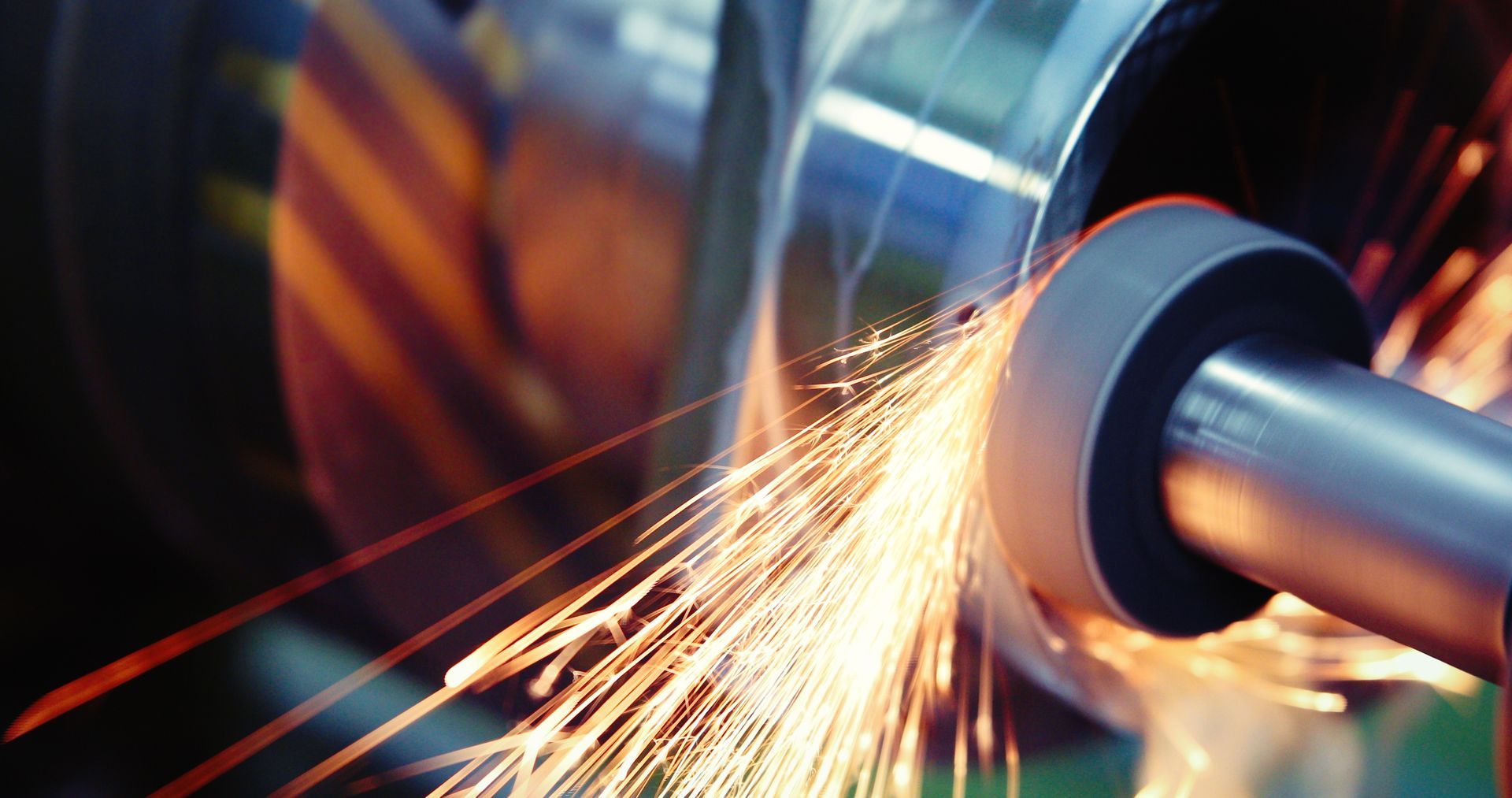
Improved straightness can often be achieved through additional processing such as centerless grinding. During grinding, the bar is supported along its length, which helps reduce variation.
Straightness expectations vary depending on:
- Bar diameter
- Bar length
- Manufacturing method
- End-use requirements
Hydraulic applications typically require tighter control than general structural uses.
Mill-Finished vs Ground Stainless Shafting
Understanding the difference between mill-finished bar and centerless ground bar is important when specifying shaft straightness.
Machining Accuracy
- Produced by hot finishing or cold finishing
- Meets standard ASTM straightness tolerances
- Suitable for general machining and fabrication
Centerless Ground Bar
- Processed after initial production
- Improved diameter consistency
- Enhanced straightness
- More uniform surface condition
Hydraulic shaft applications often benefit from centerless ground bar due to improved dimensional control.
Straightness and Diameter Interaction
Straightness tolerance does not exist independently from diameter.
Smaller diameter shafts are more susceptible to visible bow over long lengths due to lower rigidity. Larger diameter shafts are more resistant to deflection but may require stricter control for precision applications.
Longer shafts naturally allow greater total deviation compared to shorter cut lengths. Engineers should evaluate straightness requirements alongside shaft diameter and span length to determine acceptable tolerances.
Corrosion and Pressure Combined
Pressure alone does not determine material suitability. The combination of pressure and corrosive environment is often the real challenge.
In chloride-rich environments, stress corrosion cracking can occur if conditions are severe. Selecting the appropriate alloy and following proper fabrication practices helps reduce this risk.
For example, 316 stainless steel offers improved resistance compared to 304 in chloride exposure.
Material selection must consider both mechanical and environmental factors.
Measuring Straightness in Stainless Steel Bar
Straightness is typically measured by placing the shaft on a flat surface or precision rollers and checking deviation using dial indicators or measurement tools.
Measurement may be expressed as:
- Maximum deviation over total length
- Deviation per foot
Accurate measurement is important before machining to prevent issues during assembly.
Stainless Steel Grades Commonly Used in Hydraulic Shafting
Action Stainless supplies stainless steel round bar in grades commonly used in hydraulic and fluid-handling applications, including:
- 304 / 304L stainless steel
- 316 / 316L stainless steel
- 17-4 PH stainless steel
Grade selection depends on corrosion environment, strength requirements, and fabrication method.
Straightness requirements should be discussed during ordering, particularly for applications involving precision linear motion.
Straightness and Centerless Grinding
Centerless grinding can improve both diameter consistency and straightness.
Because the bar is supported throughout the grinding process, minor deviations can be reduced. This makes centerless grinding a common choice when:
- Hydraulic rods require improved alignment
- Seal performance is critical
- Rotational runout must be minimized
- Machining consistency is a priority
When straightness is critical, specifying ground bar during procurement helps align expectations.
Frequently Asked Questions About Hydraulic Shaft Straightness
Why is straightness important for hydraulic cylinder rods?
Straightness affects seal alignment, load distribution, and wear. Excessive bow can shorten seal life and reduce system efficiency.
What is acceptable straightness tolerance for hydraulic shafts?
Acceptable tolerance depends on diameter, length, and application. Precision hydraulic systems typically require tighter straightness control than general structural applications.
Does centerless grinding improve shaft straightness?
Yes. Centerless grinding can improve dimensional consistency and reduce deviation compared to standard mill-finished bar.
How is shaft straightness measured?
Straightness is measured using flat reference surfaces or precision rollers with dial indicators to detect deviation along the shaft length.
Can straightness affect machining accuracy?
Yes. Excessive bow can complicate CNC setup and affect final dimensional accuracy.
Final Thoughts
In hydraulic applications, shaft straightness directly impacts performance, reliability, and component longevity. While standard stainless steel bar meets established ASTM straightness tolerances, precision hydraulic systems often benefit from improved dimensional control.
Understanding how diameter, length, and manufacturing method influence straightness helps engineers select the right material for demanding applications.
Action Stainless supplies stainless steel round bar and offers value-added processing to support industrial and hydraulic applications. For assistance reviewing shaft requirements or discussing material availability,
contact Action Stainless to discuss your project specifications.