
Ultra-High-Purity Stainless Steel for Semiconductor Manufacturing: Applications and Standards
In the world of semiconductor manufacturing, even the smallest impurity can cause a system failure or device malfunction. Whether it’s trace metals, surface contamination, or particulates in process fluids, these risks must be eliminated at the material level. That’s why ultra-high-purity (UHP) stainless steel has become the standard for gas delivery, chemical distribution, and ultra-clean fluid transport in semiconductor fabrication.
Action Stainless supports semiconductor OEMs, fabricators, and process engineers by offering high-grade stainless tubing, fittings, and components that meet UHP requirements. We stock the grades, finishes, and diameters required for demanding semiconductor environments—and we process everything in-house to maintain traceability and reduce contamination risks.
Why Stainless Steel Matters in Semiconductor Environments
Semiconductor fabs operate under extreme control. Every surface that comes into contact with process gas, chemicals, or ultrapure water must be chemically inert, corrosion-resistant, and free of contamination. Standard industrial stainless materials simply don’t meet these elevated requirements.
UHP stainless steel is engineered to provide:
- Exceptional corrosion resistance to harsh process chemistries
- Smooth, polished surfaces that reduce particle adhesionLow surface
- roughness to prevent bacterial or chemical accumulation
- Weldable, formable material that meets strict cleanroom requirements
- Traceable certifications to meet QA and audit standards
From photolithography to wet etching, semiconductor operations depend on
precision fluid control at every step—and stainless steel is the backbone of that system.
What Makes Stainless Steel "Ultra-High-Purity"?
Not all stainless steel is suitable for UHP applications. While grades like 304 or 316 are common in industrial piping, they require additional refining, processing, and testing to be acceptable in the semiconductor space.
Key attributes of UHP stainless steel include:
1. Controlled Composition
Impurity levels must be tightly controlled at the mill. This includes limits on sulfur, phosphorus, and metallic inclusions. The most commonly used grade in semiconductor applications is 316L, but only in UHP-compliant form.
2. Electropolished or Mechanically Polished Surface
Surface roughness is critical. Most specifications call for a surface roughness (Ra) of ≤10 µin, with electropolishing often used to remove embedded particles and improve cleanability.
2. Electropolished or Mechanically Polished Surface
Surface roughness is critical. Most specifications call for a surface roughness (Ra) of ≤10 µin, with electropolishing often used to remove embedded particles and improve cleanability.
3. Cleanroom-Compatible Packaging
To maintain surface purity, components must be cleaned, bagged, and sealed in ISO class-rated environments before leaving the supplier.
4. Traceability
Mill Test Reports (MTRs), lot traceability, and documentation are required to validate the composition and processing of every tube, fitting, or bar.
5. Weldability and Integrity
For orbital welding and automated joining, stainless tubing must maintain consistent wall thickness and roundness, with minimal inclusions or defects that could compromise weld integrity.
Applications of UHP Stainless in Semiconductor Facilities
Ultra-high-purity stainless materials are used throughout fab construction, tool development, and process chemical systems. The most common applications include:
Gas Delivery Lines
Semiconductor tools require a network of gas supply lines—often for reactive, corrosive, or toxic gases. Stainless tubing provides the purity and corrosion resistance necessary for safe, leak-free transport of these materials.
Chemical Distribution Systems (CDS)
Wet chemical processing (used in etching, stripping, and cleaning) demands corrosion-resistant systems. UHP stainless pipe and fittings deliver aggressive chemistries without reacting or leaching contaminants.
Ultrapure Water (UPW) Systems
Rinsing and cleaning require water that is virtually free of ions, particles, and bacteria. Stainless steel systems are used to deliver UPW to tools and tanks without contamination.
Vacuum and Exhaust Lines
Stainless tubing is also used in low-pressure systems to manage the movement of waste gases and chemical byproducts. Leak integrity and weld performance are critical in these zones.
Fabrication Equipment
Many tools used in deposition, etching, or ion implantation are built using stainless structural elements and process tubing.
UHP Stainless vs. Industrial Stainless Steel
| Feature | UHP Stainless Steel | Industrial Stainless Steel |
|---|---|---|
| Surface Roughness (Ra) | ≤10 µin (often electropolished) | 20–40 µin (varies by process) |
| Cleanroom Packaging | Double-bagged, nitrogen-purged | Standard crates or bundles |
| Impurity Control | Tight spec limits on trace elements | Standard mill tolerance |
| Certification | Full MTRs, batch traceability | Basic material certs |
| Application | Semiconductors, pharmaceuticals | General industrial use |
Common Stainless Grades in Semiconductor Applications
While
316L remains the industry standard for UHP tubing and fittings, other grades may be selected depending on corrosion exposure, mechanical requirements, or fabrication preferences.
316L Stainless (UHP Grade)
Low carbon and molybdenum-enhanced, 316L resists most semiconductor chemicals including acids and chlorides. UHP versions are vacuum-annealed, electropolished, and packaged in class-rated facilities.
304L Stainless
Less common in semiconductor lines due to lower corrosion resistance, but still used in some structural components and non-critical fluid systems.
2205 Duplex Stainless
In high-pressure or high-chloride environments, duplex stainless offers improved strength and pitting resistance. Used in support equipment and chemical blending skids.
All UHP grades are offered by Action Stainless with documentation support and in-house cutting services for your exact build specs.
Importance of Surface Finish and Roughness
Surface finish has a direct impact on how stainless performs in semiconductor operations. A rough or pitted surface can:
- Trap particles or contaminants
- React with aggressive chemistries
- Complicate orbital welds or gasket seals
- Introduce unwanted extractables into process fluids
That’s why
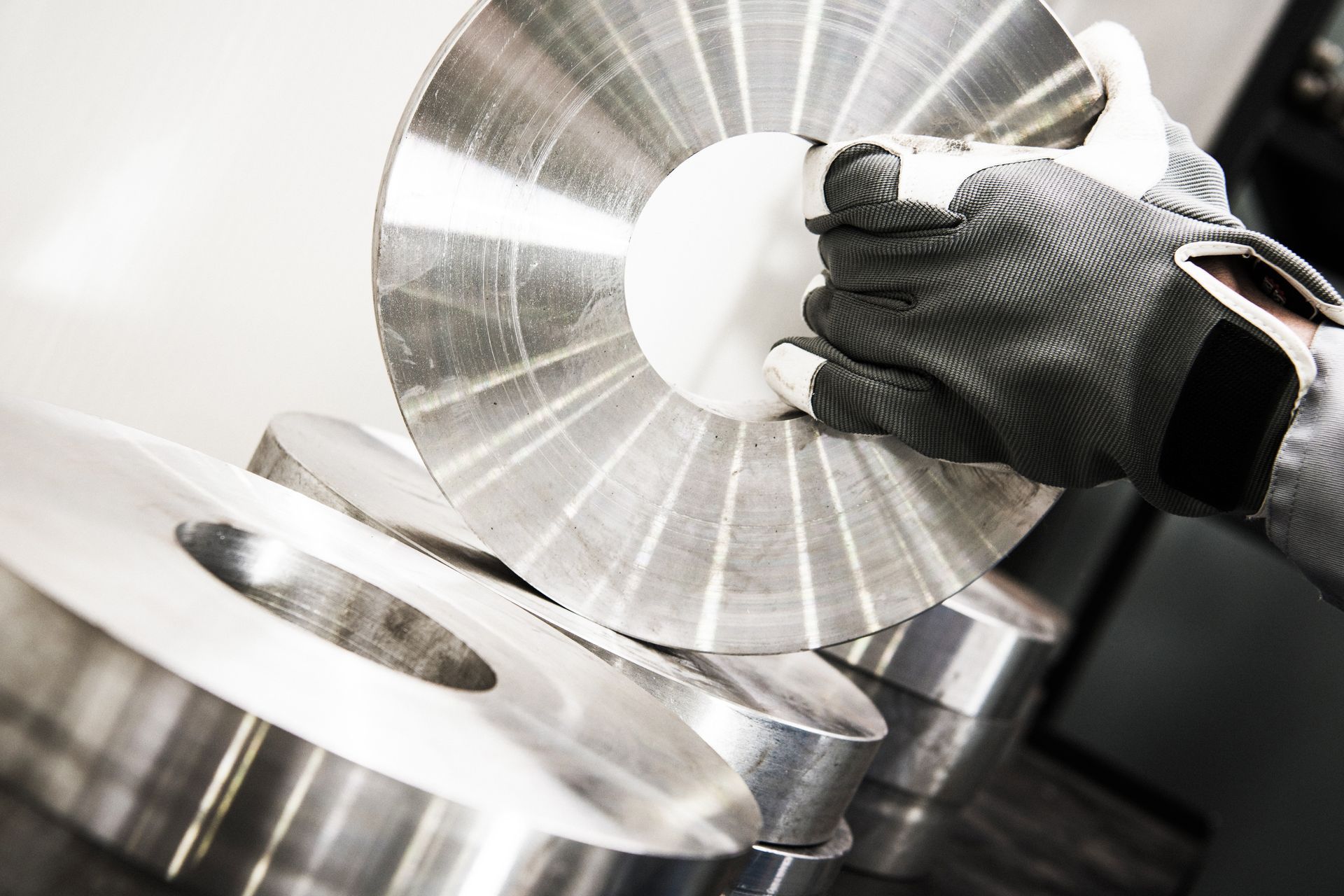
electropolishing or mechanical polishing is required for most UHP stainless tubing. These finishes smooth the surface, eliminate embedded inclusions, and provide a more passive chromium-rich layer that resists corrosion.
At Action Stainless, we stock stainless steel tubing and bar in polished finishes that meet UHP and sanitary specs. We also provide mechanical polishing on-site for fittings, pipe, and structural shapes used in support frames or utility skids.
Supporting Fabricators in the Semiconductor Sector
Tool builders, process skid fabricators, and mechanical contractors serving semiconductor clients all face one shared challenge: tight specs with tight timelines.
Action Stainless helps fabrication partners meet these demands by offering:
- Stock in 316L UHP-grade tubing, pipe, and fittings
- Saw cutting, shearing, and deburring in-house
- Support for surface finish requirements
- Mill Test Reports and batch traceability
- On-time delivery to cleanroom build sites or shops
- Consultation on material spec and substitution options
Our focus is service-first. That means when your team needs tubing cut to specific lengths, fittings matched to drawing specs, or a new part ordered in the middle of a fab build—we’re ready to deliver.
Standards & Documentation in Semiconductor Supply
Semiconductor OEMs and Tier 1 contractors often require rigorous documentation with each order. Action Stainless supports this with:
- Certified MTRs for all materials
- Heat lot traceability
- Conformance to ASME BPE, SEMI F20, and ASTM A270 standards
- Surface finish test results where applicable
- Documentation bundles for QA/QC integration
We eliminate the need for follow-up or third-party chasing—your materials arrive with the full documentation package required for validation.
Building Long-Term Reliability into Fab Systems
In an industry where downtime can cost millions, material integrity must be guaranteed from day one. Choosing the right stainless alloy, form, and finish is just the beginning. Working with a supplier who maintains material condition, cleanliness, and accuracy throughout the delivery process ensures long-term reliability.
Stainless steel’s corrosion resistance, weldability, and durability make it indispensable in semiconductor systems—but only when backed by the proper supply and processing practices. Action Stainless delivers not just material, but confidence.
Why Fabricators Choose Action Stainless for UHP Projects
Clean material. Precise cuts. Certified documentation. On-time delivery. These are the cornerstones of every successful semiconductor project.
Fabricators, EPC firms, and process tool builders choose Action Stainless because we:
- Eliminate delays with in-stock material
- Handle all cutting, shearing, and polishing in-house
- Understand and meet UHP requirements
- Provide traceable, compliant documentation
- Offer responsive service from quote to delivery
Whether you’re building gas cabinets, chemical distribution skids, or full fab infrastructure, Action Stainless delivers the material and support you need to build with confidence.