
CNC Machining vs. Manual Fabrication: When to Use Each for Stainless Steel Parts
Precision defines performance in stainless steel fabrication. Whether it’s a pump component, valve housing, or custom bracket, the manufacturing method chosen determines how accurate, repeatable, and cost-effective a part will be. The debate between CNC machining and manual fabrication isn’t about which is better overall- it’s about which is right for the job.
At
Action Stainless, both processes play vital roles. The company’s facility integrates
CNC machining, cutting, and grinding
to produce stainless components for industries that rely on precision from food processing and energy to OEM manufacturing. Understanding when to use CNC machining versus manual fabrication helps customers make the best technical and financial decisions for each project.
Understanding CNC Machining in Stainless Fabrication
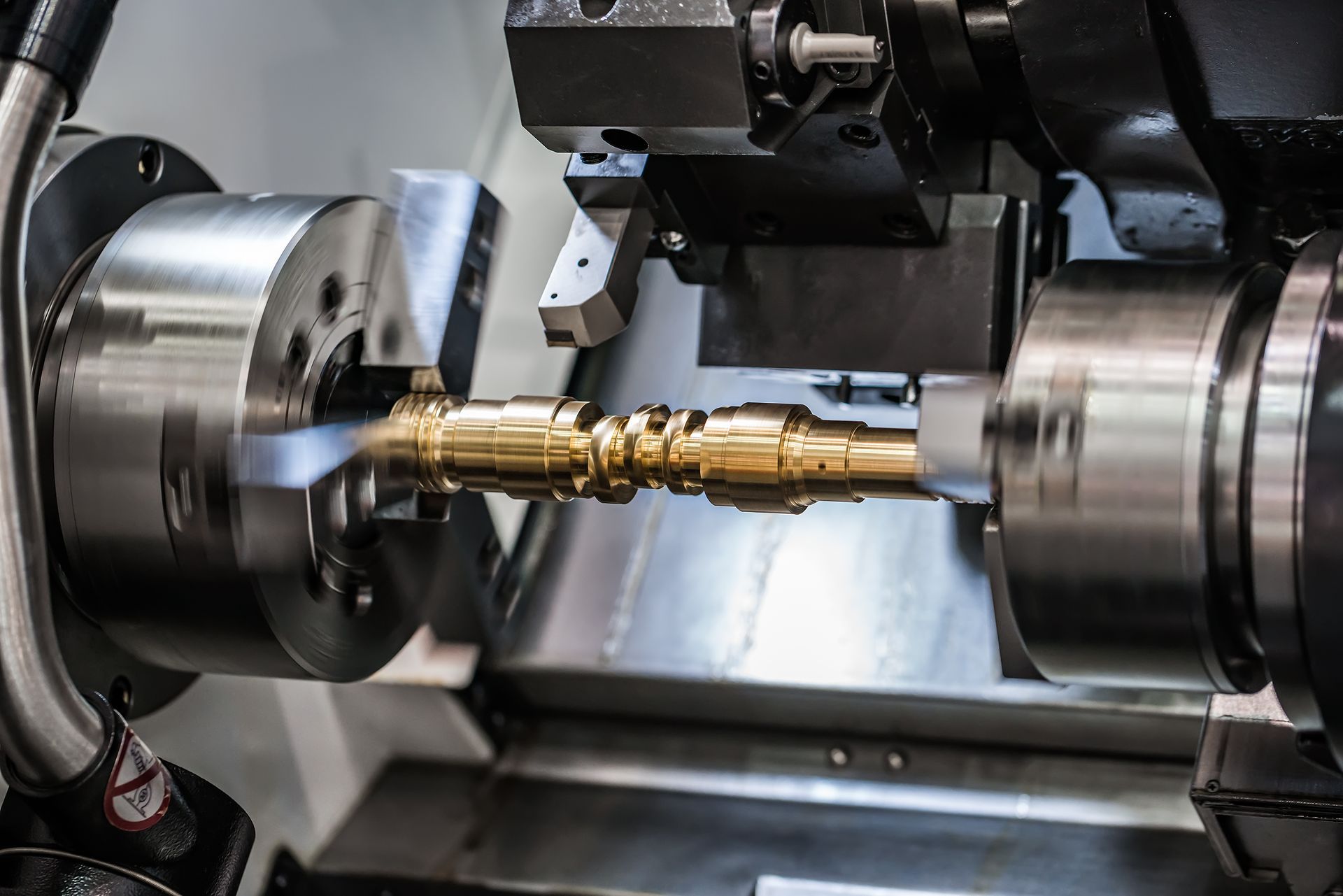
CNC (Computer Numerical Control) machining uses computer-guided equipment to cut, drill, turn, or mill stainless steel parts with exceptional accuracy. Unlike manual operations, every motion of the tool is programmed and repeatable.
For stainless components, this level of control ensures consistent tolerances across batches and eliminates human variability. CNC machines excel when projects require high precision, complex geometries, or repeated production runs.
Action Stainless uses CNC equipment for processes such as:
- Turning stainless bar stock into shafts or threaded fittings
- Milling precision pockets or contours in plate components
- Drilling and tapping consistent hole patterns
- Producing repeat parts with identical specifications
Because the motion paths are digitally programmed, the first part and the thousandth part match perfectly, a key advantage for customers who need long-term consistency.
Manual Fabrication: The Foundation of Stainless Work
Before CNC automation, all fabrication was manual. Skilled machinists and fabricators relied on years of experience, manual mills, lathes, and saws to shape and finish metal. Today, manual fabrication still plays an essential role, especially in low-volume or custom work.
Manual fabrication offers flexibility and hands-on control. For one-off parts, repairs, or pieces requiring adjustments during production, a manual approach is often faster than programming a CNC machine.
For instance:
- A small bracket cut from stainless sheet may only need a few manual mill passes.
- Custom fittings or unique prototype components can be shaped more efficiently by a skilled machinist using hand controls.
- One-time reworks or modifications are handled quickly without setup time.
Manual fabrication also supports secondary processes like polishing, welding, and fine adjustments that complement CNC precision.
Comparing CNC Machining and Manual Fabrication
While both methods achieve high-quality results, the differences in efficiency, cost, and repeatability determine which one best fits a project.
| Factor | CNC Machining | Manual Fabrication |
|---|---|---|
| Precision | Extremely high, repeatable within ±0.001” | Depends on operator skill |
| Setup Time | Higher (programming and fixturing required) | Minimal setup, fast for one-offs |
| Production Speed | Faster for large batches | Faster for single parts or small runs |
| Complex Geometry | Ideal for intricate contours or patterns | Limited by manual control |
| Labor Dependence | Automated, minimal operator variation | Operator-dependent results |
| Cost Efficiency | Best for repeat or high-volume parts | Best for prototypes and repairs |
Both methods deliver value when applied correctly. CNC machining excels in precision and scalability, while manual fabrication shines in adaptability and quick response work.
When CNC Machining Offers the Best ROI
CNC machining provides unmatched return on investment (ROI) for projects that demand tight tolerances, repeatability, or detailed geometry.
In stainless steel applications, CNC precision ensures proper fits for assemblies that rely on mechanical sealing, pressure containment, or alignment. Industries such as food processing, marine, and energy rely on CNC-cut stainless parts because even microscopic deviations can impact performance or sanitation compliance.
Common examples where CNC machining delivers clear ROI include:
- Hydraulic shafts and valves requiring consistent diameters and finishes
- Pump and impeller components with complex profiles
- Precision fittings or flanges that must align perfectly for leak-free performance
- High-volume OEM parts needing identical repetition
Action Stainless’s CNC equipment integrates seamlessly with its inventory and cutting operations, allowing precise machining of both bar and plate materials. The result: parts arrive on spec, on time, and ready for assembly.
When Manual Fabrication Makes More Sense
Manual fabrication remains the best choice for low-quantity orders, quick modifications, or non-critical tolerances. When precision needs are moderate and speed to completion is the priority, a skilled machinist can complete the task faster without the overhead of programming or fixturing.
Manual processes also complement CNC work. For instance, parts may be rough cut or prepped manually before CNC finishing. Likewise, manual polishing or edge cleanup often follows CNC machining to achieve specific finishes or visual quality standards.
Manual fabrication’s strength lies in adaptability. A seasoned technician can quickly respond to unique design changes or material quirks that might delay an automated system. This flexibility ensures that small-scale or customized projects are completed efficiently and accurately even outside of full production runs.
Precision in Stainless: Why CNC Holds the Edge
Stainless steel can be challenging to machine. Its toughness, work hardening properties, and sensitivity to heat make precision cutting difficult without proper tooling and control. CNC machining provides the consistency and control needed to overcome these challenges.
By regulating feed rates, spindle speeds, and coolant application automatically, CNC systems maintain dimensional accuracy while protecting tool life. This is especially critical for grades like 304, 316, and 17-4PH, where minor tool wear can cause dimensional drift or surface irregularities.
At Action Stainless, these capabilities allow the machining of complex parts that might be impractical using manual methods such as tight-tolerance grooves, precision threads, and multi-axis surfaces. Every part is programmed to maintain accuracy across all production stages.
Quality, Inspection, and Repeatability
Whether fabricated manually or machined on CNC equipment, every part at Action Stainless undergoes inspection to verify compliance with drawings and material specifications. CNC-machined parts benefit from consistent dimensional verification directly within the digital workflow, while manual components receive hands-on inspection and measurement.
This ensures both methods deliver to the same quality standard, the key difference being how the precision is achieved. CNC ensures consistency across volume; manual machining ensures adaptability for custom needs. Together, they offer the flexibility and dependability that complex stainless projects demand.
Integrating CNC and Manual Capabilities in One Facility
What sets Action Stainless apart is the ability to combine multiple fabrication disciplines in one location - CNC machining, cutting, grinding, and finishing.
This integration means customers can source raw material, precision-cut plate, and machined components all from the same team. Parts can move directly from waterjet or laser cutting to CNC turning, then to polishing or inspection without leaving the facility.
That level of coordination eliminates time lost between vendors, reduces freight costs, and maintains dimensional consistency across all components in a build. It also simplifies documentation, since Mill Test Reports (MTRs), dimensional checks, and surface finish data are tracked through one unified quality process.
Choosing the Right Method for Your Stainless Steel Project
Selecting between CNC machining and manual fabrication comes down to evaluating three key criteria:
- Precision requirements: If parts must meet tolerances tighter than ±0.002”, CNC machining is almost always the right choice.
- Volume and repeatability: CNC provides clear advantages when producing large quantities or identical components.
- Timeline and customization: Manual machining wins for small runs, prototypes, or projects requiring flexibility and hands-on adjustments.
In many cases, the most efficient solution involves a combination manual prep followed by CNC finishing or vice versa. Action Stainless’s team helps customers evaluate each order based on budget, tolerance, and turnaround goals to ensure the best result every time.
Conclusion
In stainless steel fabrication, there’s no universal best method, only the best fit for each project. CNC machining delivers precision, repeatability, and scalability. Manual fabrication provides flexibility, speed, and craftsmanship. Together, they create a balanced approach that ensures every stainless part meets its intended function efficiently and accurately.
By maintaining both CNC and manual capabilities under one roof, Action Stainless gives customers the freedom to choose the right process without compromising on quality or lead time. Whether your next project calls for automated precision or custom craftsmanship, the team ensures the final result is reliable, repeatable, and built to specification.
FAQs: CNC Machining vs. Manual Fabrication
While both methods achieve high-quality results, the differences in efficiency, cost, and repeatability determine which one best fits a project.
What’s the main advantage of CNC machining for stainless steel?
CNC machining offers unmatched precision and repeatability. Once programmed, the machine produces identical parts within tight tolerances, ideal for high-performance stainless applications.
When should manual fabrication be used instead of CNC?
Manual fabrication is best for one-off parts, quick repairs, or prototypes where setup time for CNC would exceed the value of automation.
Does CNC machining cost more than manual work?
CNC may have a higher upfront setup cost, but it becomes more economical for medium to high-volume runs due to repeatability and lower scrap rates.
Can Action Stainless handle both processes in-house?
Yes. The facility integrates CNC machining, manual fabrication, and finishing, ensuring customers receive the right balance of precision and speed for every order.
What stainless grades can be machined?
Action Stainless regularly machines 303, 304, 316, and 17-4PH stainless steels, along with specialty alloys upon request.
Need help choosing between CNC machining and manual fabrication?
Contact Action Stainless to discuss your project and determine the most efficient process for your stainless steel parts.