
Common Centerless Grinding Challenges
Centerless grinding is one of the most reliable and efficient methods for producing straight, round, dimensionally consistent stainless steel bars. For industries that depend on accurate shafting hydraulic systems, pump manufacturers, motion-control assemblies, food-processing equipment, marine components, and OEM machinery, the process delivers outstanding performance. It removes material evenly, improves finish, reduces runout, and produces consistent OD sizing across long lengths.
But like any precision finishing process, centerless grinding presents technical challenges. Achieving high-quality results requires an understanding of how pressure, wheel geometry, work-rest setup, and material behavior interact during grinding. Successful operators know how to identify small issues before they affect tolerances or finish. At Action Stainless, the combination of experience, controlled processes, and in-house expertise ensures that customers receive stainless bars that meet demanding specifications on every order.
This article examines the most common centerless grinding challenges, why they occur, and how Action Stainless overcomes them to maintain consistent grinding quality.
Understanding the Complexity of Centerless Grinding
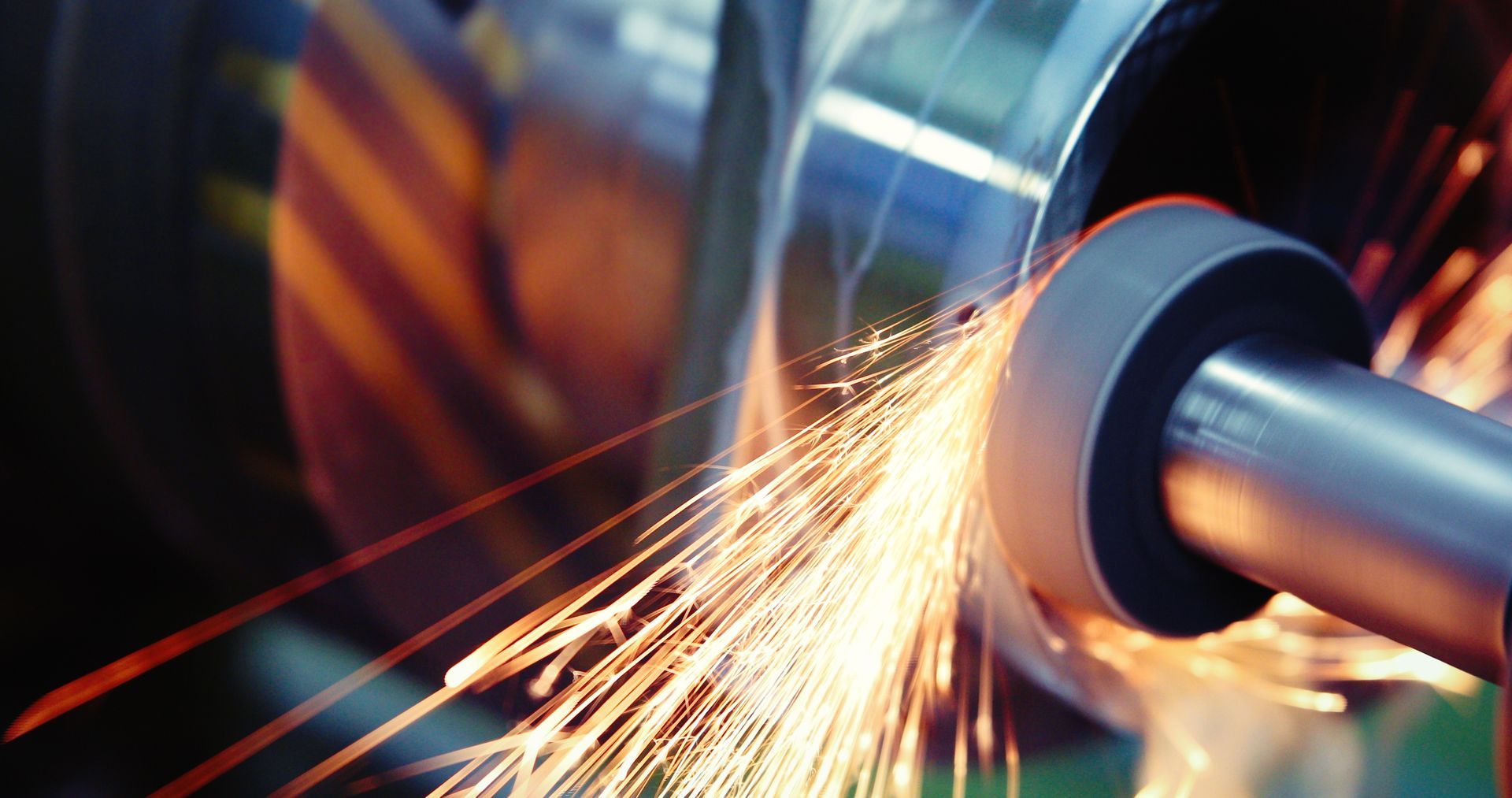
Centerless grinding may look simple from the outside just a bar rotating between two wheels but its accuracy depends on multiple variables working together. Wheel speed, feed rate, blade height, material rigidity, wheel condition, and pressure all influence the finished bar. Because the bar is not clamped, the process must be finely tuned to avoid vibration, shape distortion, or dimensional deviation.
Grinding solid stainless bar offers excellent stability, but challenges can appear when:
- The bar is long
- The bar has natural mill imperfections
- The material is hard or heat-sensitive
- The wheel or blade wears over time
- The setup is not perfectly aligned
Centerless grinding is a balancing act literally and mechanically and experienced operators know how to detect early signs of problems before they affect the final part.
Challenge 1: Out-of-Round Parts
One of the most common issues in centerless grinding is producing parts that are not perfectly round. Out-of-roundness may come from the bar’s incoming condition or from the grinding setup.
Roundness can shift when:
- The work-rest blade height is incorrect
- The regulating wheel is not angled properly
- The grinding wheel is glazed or uneven
- Feed pressure is inconsistent
- The bar has internal stresses from drawing or rolling
Slight ovality from the mill is common in stainless bar, but the purpose of centerless grinding is to correct these irregularities.
How Action Stainless Overcomes It
Action Stainless focuses heavily on work-rest blade positioning, which is essential for correct roundness. Blade height is adjusted precisely relative to the grinding and regulating wheels. This ensures the bar rotates correctly and receives uniform pressure across its circumference.
Additionally:
- Wheels are maintained and dressed to preserve geometry
- Bar stock is evaluated prior to grinding to understand incoming shape
- Feed rates are adjusted based on grade, hardness, and diameter
These steps produce consistently round stainless bars ready for machining or assembly.
Challenge 2: Chatter Marks or Vibration
Chatter is a vibrational pattern that transfers to the bar during grinding, creating wavelike marks that reduce surface finish quality. It can result from mechanical vibration, imbalanced wheels, or incorrect feed setup.
Chatter may appear when:
- The regulating wheel loses traction
- The grinding wheel is not dressed properly
- The bar is too flexible at certain lengths
- The wheel speeds are not synchronized
- Machine components have minor wear
Stainless steels, particularly hardened grades, can amplify chatter if not supported correctly.
How Action Stainless Overcomes It
To reduce chatter, Action Stainless maintains strict control over:
- Wheel dressing intervals
- Wheel balance
- Blade rigidity
- Grinding wheel condition
- Contact pressure between wheels and bar
By focusing on stable support and correct pressure, vibration is minimized and surface integrity remains consistent.
Challenge 3: Tolerance Drift During Production
Over long runs, tolerances may drift as wheels wear or temperatures change. Even small shifts in wheel condition or machine stability can lead to deviation.
Tolerance drift can be caused by:
- Gradual abrasive wheel wear
- Temperature changes in wheels or bar stock
- Variations in bar hardness
- Incorrect feed angles
- Accumulated debris on wheels or blade
These shifts affect diameter consistency and final performance.
How Action Stainless Overcomes It
Operators regularly verify OD measurements during production. This ongoing inspection allows adjustments before tolerance variation can accumulate. Wheels are dressed at controlled intervals to maintain a consistent cutting profile. By resetting the wheel surface and removing glazing, the grinding process remains stable across long batches.
Material temperature is also monitored. Stainless can expand slightly if it heats during grinding, so feed rates and pressures are adjusted to prevent excessive heat buildup.
Challenge 4: Poor Surface Finish
Surface finish affects more than appearance, it influences lubrication, sealing, wear resistance, and corrosion behavior. Poor finish may result from wheel glazing, dull abrasives, vibration, or incorrect grinding speed.
Surface finish problems may appear as:
- Lines
- Rough patches
- Dull areas
- Burnish marks
- Irregular texture
How Action Stainless Overcomes It
Surface finish is controlled by:
- Proper wheel selection for stainless grades
- Correct grinding pressure
- Dressing wheels frequently
- Maintaining clean, smooth blade surfaces
Action Stainless also offers polishing, allowing customers who need aesthetic or sanitary finishes to pair grinding with a final polish.
Challenge 5: Bar Deflection or Bending
Long stainless bars naturally flex under their own weight. If not supported properly, this can cause uneven grinding or inconsistent diameter.
Deflection increases when:
- The bar is long and slender
- The material has residual stresses
- Incoming straightness is poor
- Feed pressure is too high
How Action Stainless Overcomes It
Action Stainless evaluates incoming straightness and adjusts blade positioning to ensure support across the bar. Material handling before grinding is also controlled, reducing the chance of introducing new bends during preparation.
Centerless grinding inherently improves straightness because the bar is continuously supported and the grinding pressure corrects minor bends. This advantage helps produce straighter, more stable bar stock for precision applications.
Challenge 6: Incorrect Setup or Wheel Alignment
Centerless grinding is highly sensitive to alignment. A small deviation in blade height, wheel angle, or spacing can influence all downstream results.
Incorrect setup can lead to:
- Taper
- Out-of-roundness
- Poor finish
- Dimensional drift
How Action Stainless Overcomes It
Experienced operators review each setup carefully before production. Wheel alignment, blade placement, and regulating wheel angles are checked and corrected during setup. This attention to detail prevents many potential quality issues before they begin.
Comparison Table: Grinding Challenges and Solutions
| Challenge | Cause | How Action Stainless Solves It |
|---|---|---|
| Out-of-round parts | Incorrect blade height, wheel geometry | Precise blade adjustments, frequent wheel dressing |
| Chatter/vibration | Wheel imbalance, poor traction | Stabilizing wheels, adjusting pressure and speed |
| Tolerance drift | Wheel wear, heat buildup | Continuous measurement, controlled dressing |
| Poor finish | Glazed wheels, vibration | Correct abrasives, balanced feed, clean blade |
| Deflection | Long slender bars | Support techniques, controlled pressure |
| Setup errors | Misalignment | Experienced operator setup and verification |
Why Experience Matters in Centerless Grinding
The challenges in centerless grinding are well-known throughout the industry. What separates high-quality grinding from inconsistent results is the operator’s and facility’s ability to anticipate problems, adjust parameters, and continually monitor output. Action Stainless relies on years of in-house expertise combined with consistent process controls to maintain accuracy throughout each run.
This commitment ensures stainless bars come off the grinder ready for machining or immediate use in hydraulic, marine, food-processing, or OEM applications.
Conclusion
Producing high-quality ground stainless bar requires attention to detail at every step. Centerless grinding is a powerful process, but it demands experience to avoid issues like chatter, tolerance drift, and out-of-roundness. Action Stainless combines skilled operators, proper equipment alignment, consistent wheel dressing, and controlled processes to overcome these challenges and deliver reliable, repeatable grinding results.
To request a quote or check availability for precision-ground stainless bar, visit https://www.actionstainless.com and connect with the team.
FAQs: Centerless Grinding Troubleshooting
Why do centerless-ground parts go out of round?
Incorrect blade height or wheel geometry can cause ovality. Proper setup and wheel dressing solve it.
What causes chatter in centerless grinding?
Vibration or wheel imbalance. Adjusting wheel condition and pressure reduces chatter.
Can grinding fix straightness issues?
Yes. Centerless grinding can correct minor bends due to its continuous support system.
Does Action Stainless provide polishing after grinding?
Yes. Polishing is available when the application requires a smoother, more refined surface.
How does Action ensure tolerance consistency?
Frequent measurements, steady wheel dressing, and controlled feed pressure keep tolerances stable.