
Multi-Line Orders with Varying Tolerances: How One Facility Solves Complex Fabrication
In precision metal fabrication, not every order is simple. Some require dozens of line items, each with unique material grades, thicknesses, and dimensional tolerances. Coordinating those requirements across multiple vendors can be a challenge one that slows production, complicates quality control, and adds cost.
Action Stainless was built to simplify that complexity. By combining plate cutting, centerless grinding, CNC machining, and polishing in one facility, the company eliminates coordination issues and ensures consistent tolerances across multiple components in a single order.
For customers who handle
multi-line stainless fabrication projects, this integration means less waiting, fewer reworks, and a seamless transition from raw material to finished part.
What Makes Multi-Line Orders Complex
Multi-line fabrication orders often include a range of products sheet, plate, bar, or tube each requiring different processes and tolerances. For example, a single order may include:
- Laser-cut plates with ±0.010" precision
- Ground bar shafts requiring ±0.0005" tolerance
- Polished tubing with specific Ra finish requirements
Coordinating this level of detail across multiple suppliers adds risk. Dimensional variation, delivery delays, and inconsistent documentation can cause downstream problems during assembly or production.
That’s where Action Stainless stands out by providing
cutting, grinding, and finishing under one roof, it ensures every part meets the same dimensional and quality standards before leaving the facility.
Integrating Multiple Fabrication Processes in One Workflow
The strength of Action Stainless lies in its ability to process stainless steel from stock to finished dimension without transferring material between suppliers.
Every stage from cutting to grinding to finishing is performed on-site, allowing direct communication between operators, engineers, and quality personnel. This structure minimizes tolerance stacking and maintains precision even across large, complex orders.
Here’s how the integrated workflow functions:
- Cutting and Profiling - Laser, waterjet, or plasma cutting shapes the base material.
- Grinding and Straightening - Centerless grinders refine bar and shaft tolerances to within ±0.0005".
- Polishing and Finishing - Surface refinement for Ra specifications in sanitary or aesthetic applications.
- Final Inspection and Packaging - Dimensional checks, documentation, and lot traceability.
This closed-loop approach ensures each part maintains its specified tolerance and finish, even when multiple operations are performed sequentially.
Advantages of Unified Fabrication for Multi-Line Projects
Multi-line fabrication orders benefit from more than convenience, they gain consistency. When all work is done within the same facility, quality, timing, and tolerances align perfectly across the entire order.
Action Stainless’s customers experience several measurable benefits:
- Fewer process delays because parts don’t wait for transfer between vendors.
- Improved dimensional consistency across components processed under uniform quality standards.
- Shorter overall lead times due to coordinated scheduling.
- Reduced handling and freight costs by consolidating multiple fabrication steps in one shipment.
This approach helps both production and maintenance teams meet deadlines with less supervision and fewer quality issues.
Varying Tolerances: The Real Challenge in Stainless Fabrication
Not all parts in a project require the same precision. Some components can tolerate ±0.010", while others need ±0.001" or better. Managing this variation efficiently demands coordination between equipment, operators, and inspection processes.
At Action Stainless, each operation is calibrated for its tolerance target:
- Laser and waterjet cutting for near-net precision and smooth edges.
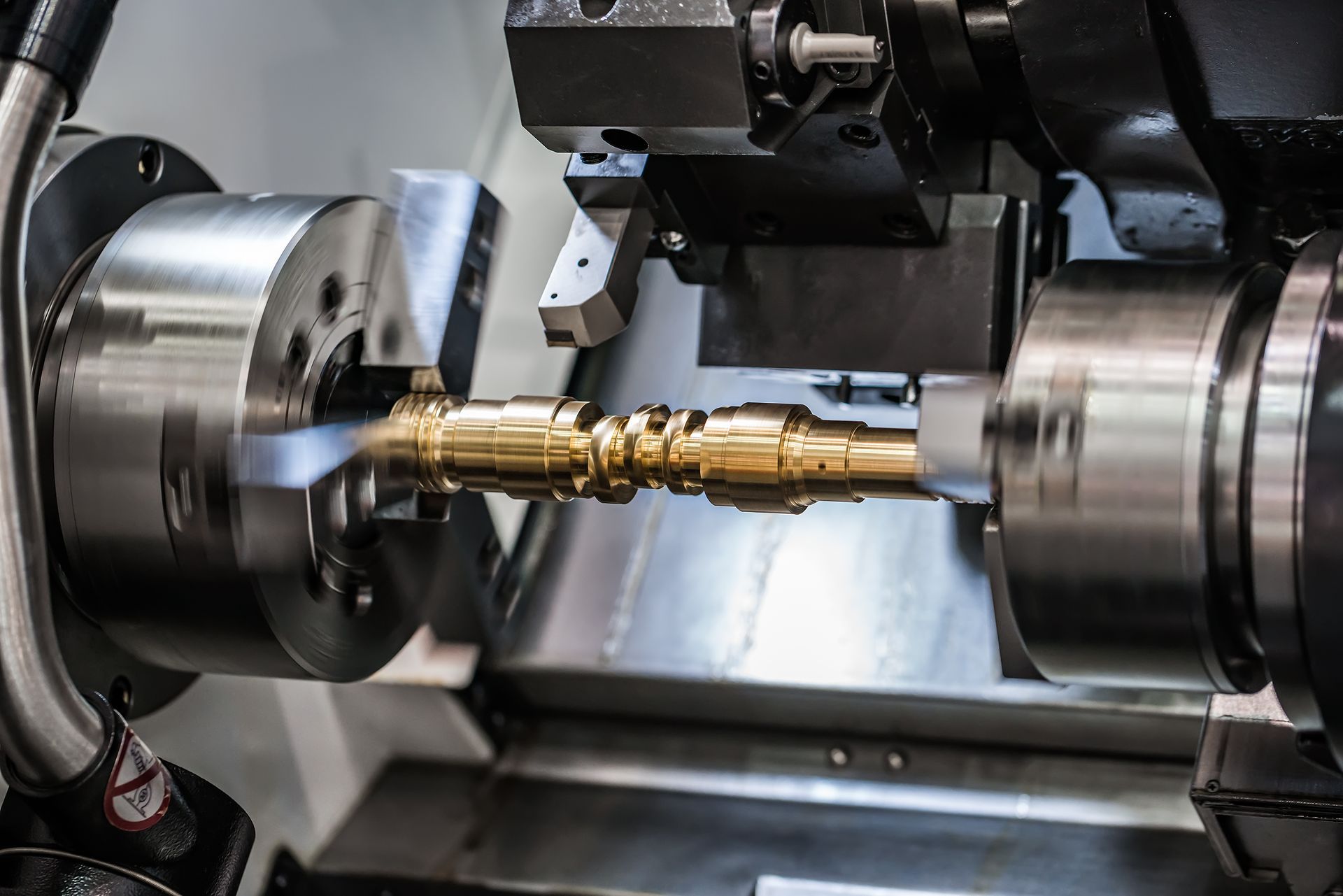
- Centerless grinding for ultra-tight dimensional accuracy.
- CNC machining for final fits and critical dimensions.
This multi-process capability allows Action Stainless to deliver
mixed-tolerance
projects where every component meets its design intent without wasted time or costly over-processing.
Comparing Traditional vs Integrated Fabrication Workflows
The difference between outsourcing to multiple vendors and using an integrated facility like Action Stainless can be seen clearly in terms of time, cost, and consistency.
| Workflow Factor | Traditional Multi-Vendor Approach | Integrated Facility (Action Stainless) |
|---|---|---|
| Lead Time | 2–3x longer due to vendor coordination | Streamlined scheduling, shorter total cycle time |
| Tolerance Control | Inconsistent between suppliers | Uniform precision maintained throughout |
| Communication | Multiple hand-offs | Single project team overseeing all processes |
| Freight & Handling | Multiple shipments | One shipment, reduced risk of damage |
| Traceability | Fragmented paperwork | Single-source MTR and inspection reports |
By keeping every process in-house, Action Stainless helps customers achieve predictable timelines and repeatable results, regardless of project complexity.
Consistency Across Material Types and Dimensions
A hallmark of complex stainless fabrication is managing mixed material grades and thicknesses. A single project might include 304L plate, 316 bar, and 17-4PH shafts each responding differently to heat and pressure during processing.
Because Action Stainless handles all operations internally, technicians can monitor and adjust process parameters based on specific alloy behavior. Whether it’s compensating for slight thermal distortion during laser cutting or maintaining concentricity during grinding, the company’s integrated control ensures every component aligns dimensionally at final inspection.
This kind of precision is what allows customers to assemble systems or equipment without modification ,a critical factor for OEM and process equipment builders.
Quality Control and Documentation
Complex, multi-line orders demand meticulous tracking. Action Stainless provides full documentation at every stage, including:
- Mill Test Reports (MTRs) for material traceability
- Dimensional inspection logs for tolerance verification
- Surface finish measurements for Ra compliance
- Packaging and labeling by line item for clear identification
Each order receives a unified inspection record, simplifying audits and quality reviews. This single-source documentation process is particularly valuable for regulated industries like
food processing, pharmaceutical manufacturing, and energy equipment production.
Shorter Lead Times Without Compromising Accuracy
Reducing production time doesn’t mean cutting corners. By coordinating multiple fabrication processes in a single facility, Action Stainless can often complete complex, multi-line projects in significantly less time than multi-vendor supply chains.
The result is faster delivery without quality trade-offs, a capability that has become increasingly important for manufacturers facing tight production windows. When customers can move from quote to completed order in one continuous workflow, they gain not only efficiency but also consistency and cost control.
Partnering with Action Stainless for Complex Fabrication
For engineers and buyers managing projects with numerous line items and tight tolerances, Action Stainless provides a single point of contact for the entire job. From precision-ground bar to laser-cut plate, every part is produced to exact specifications within the same facility.
The company’s combination of cutting, grinding, CNC machining, and finishing enables it to handle complex stainless fabrication with precision, speed, and reliabilit,y three factors that keep customers returning for repeat projects.
With clear communication, coordinated scheduling, and complete traceability, Action Stainless delivers the efficiency multi-line fabrication demands and the quality every customer expects.
Conclusion
Complex fabrication doesn’t have to mean complex logistics. By integrating cutting, grinding, and machining capabilities in one location, Action Stainless simplifies even the most detailed multi-line orders. Each component, regardless of tolerance or finish, is produced under consistent standards for quality and accuracy.
This unified process saves time, reduces cost, and ensures that when components come together in final assembly, they fit every time. For companies managing diverse stainless fabrication projects, Action Stainless provides a smarter, more controlled way to get it all done.
FAQs: Multi-Line Fabrication & Varying Tolerances
What is a multi-line fabrication order?
It’s an order that includes multiple parts or materials, each with different sizes, grades, or tolerances, processed under a single purchase order.
How does Action Stainless manage varying tolerances?
Each process cutting, grinding, and CNC machining is optimized for specific tolerance levels. Tight communication between departments ensures consistency across every part.
Why is an integrated facility better for complex fabrication?
Keeping all fabrication steps under one roof reduces hand-offs, eliminates rework, and ensures precise alignment between components.
What materials can be processed in multi-line orders?
Action Stainless regularly works with stainless grades such as 304, 316, 2205 duplex, and 17-4PH, along with specialty alloys on request.
How does documentation work for large, complex orders?
Customers receive unified inspection and MTR documentation for all line items, simplifying traceability and quality verification.
Have a complex stainless project with multiple components?
Contact Action Stainless today to discuss your multi-line fabrication needs and see how integrated cutting, grinding, and CNC processes can streamline your next build.