
Welded vs. Seamless Stainless Steel Pipe: Pros, Cons, and Uses
Selecting stainless steel pipe involves more than choosing a grade or size. One of the most common questions engineers, fabricators, and procurement teams ask is whether welded or seamless stainless steel pipe is the better option. Both types are widely used, both meet industry standards, and both perform well when selected correctly. The key is understanding how each is made and how that affects performance, cost, and application suitability.
While Action Stainless supplies stainless steel pipe for a wide range of industrial uses, customers often need guidance on which pipe type best fits their operating conditions. This article explains the differences between welded and seamless stainless steel pipe, outlines the advantages and limitations of each, and helps buyers make informed decisions.
How Seamless Stainless Steel Pipe Is Made
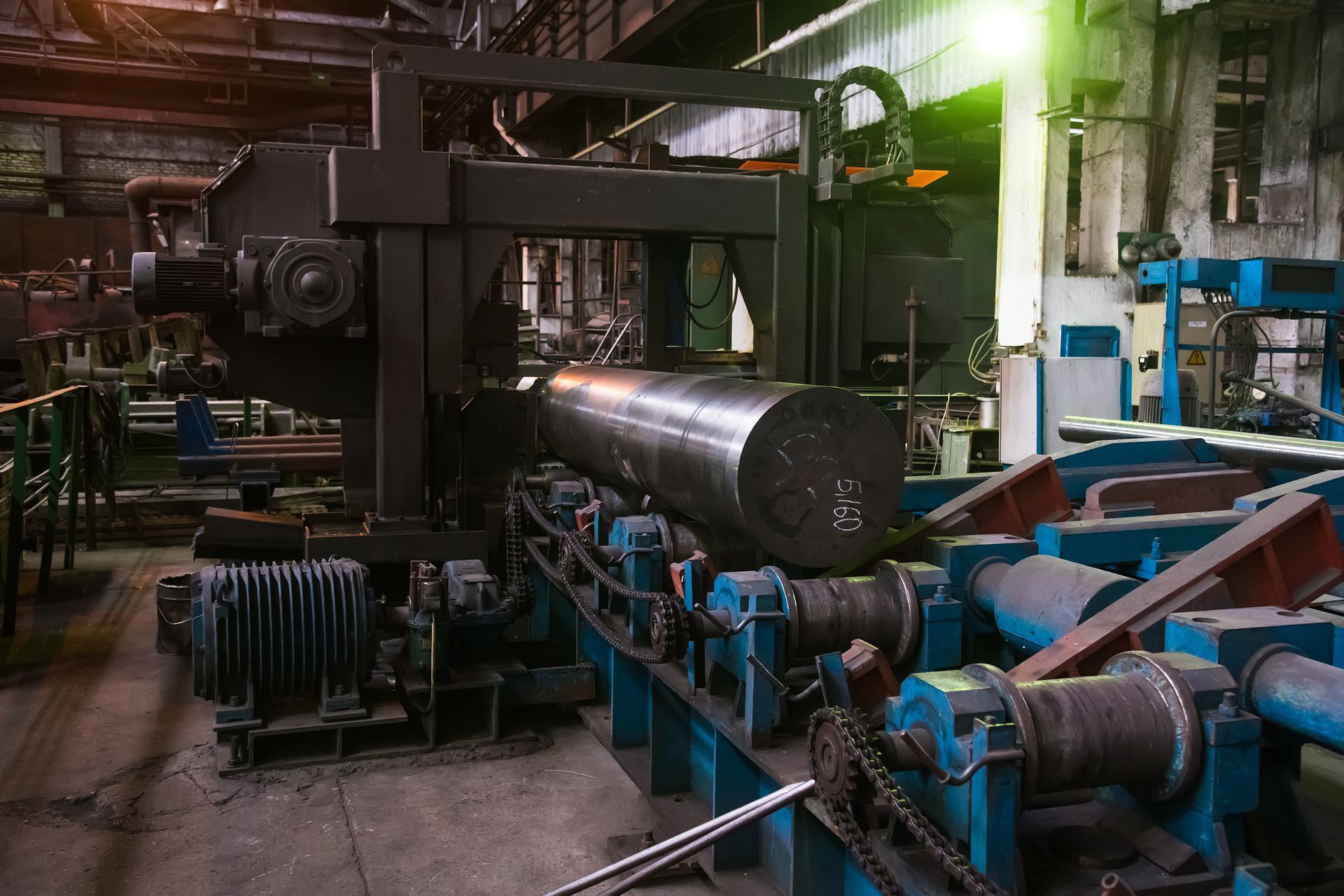
Seamless stainless steel pipe is produced by piercing a solid billet and then rolling or drawing it to the desired diameter and wall thickness. Because it starts as a solid piece of metal, seamless pipe has no longitudinal weld seam.
The absence of a seam is the defining characteristic of seamless pipe. This construction gives seamless pipe uniform material properties around the entire circumference.
Seamless stainless steel pipe is commonly selected for applications involving:
- High pressure
- High temperature
- Severe service conditions
- Critical mechanical performance
Because of the manufacturing process, seamless pipe is often more expensive and may have longer lead times, especially for larger diameters or heavier wall thicknesses.
How Welded Stainless Steel Pipe Is Made
Welded stainless steel pipe begins as stainless steel strip or plate that is rolled into a tubular shape and welded along the length of the pipe. The weld seam is then processed to ensure dimensional accuracy and structural integrity.
Modern welded pipe manufacturing produces consistent, high-quality welds that meet applicable standards. In many cases, welded pipe performs just as well as seamless pipe for typical service conditions.
Welded stainless steel pipe is widely used in:
- Process piping
- Food and beverage systems
- Chemical transfer lines
- Structural and architectural applications
- Low- to moderate-pressure systems
Because the manufacturing process is more efficient, welded pipe is often more readily available and cost-effective.
Strength and Pressure Considerations
One of the most common assumptions is that seamless pipe is always stronger than welded pipe. While seamless pipe does not contain a weld seam, modern welded pipe is engineered so that the weld is not a weak point under normal operating conditions.
For many applications, welded stainless steel pipe provides sufficient strength and pressure performance when properly specified. Seamless pipe is typically reserved for situations where operating conditions are more extreme or where specifications explicitly require it.
The choice should be based on actual service requirements rather than assumptions.
Surface Finish and Cleanliness
Surface finish is particularly important in industries such as food processing, pharmaceuticals, and chemical handling. Welded pipe can be manufactured with smooth internal surfaces, and the weld seam can be processed to reduce irregularities.
Seamless pipe naturally lacks a weld seam, which can simplify cleaning in certain applications. However, both welded and seamless pipe can meet cleanliness requirements when specified and maintained correctly.
Action Stainless supplies stainless steel pipe suitable for applications where corrosion resistance and cleanliness are important considerations.
Availability and Cost Differences
Availability is often a deciding factor. Welded stainless steel pipe is typically available in a wider range of sizes and wall thicknesses, making it easier to source for standard applications. It is generally more cost-effective due to efficient manufacturing.
Seamless pipe may be preferred for specialized applications but can be more limited in size availability and typically carries a higher cost.
Understanding these trade-offs helps procurement teams balance performance requirements with budget and lead time constraints.
Typical Applications for Each Pipe Type
Seamless stainless steel pipe is commonly used in:
- High-pressure systems
- High-temperature service
- Critical mechanical applications
- Energy and industrial systems
Welded stainless steel pipe is commonly used in:
- Process piping
- Food and beverage systems
- Water and wastewater facilities
- Structural applications
- General industrial piping
Both types perform well when matched correctly to the application.
Welded vs. Seamless Stainless Steel Pipe: Side-by-Side Comparison
| Factor | Welded Stainless Steel Pipe | Seamless Stainless Steel Pipe |
|---|---|---|
| Manufacturing Method | Rolled and welded from strip/plate | Pierced from solid billet |
| Weld Seam | Present | None |
| Cost | Typically lower | Typically higher |
| Availability | Widely available | More limited |
| Pressure Applications | Low to moderate | Moderate to high |
| Surface Consistency | High with modern processing | Uniform by design |
| Typical Uses | Process piping, structural | High-stress service |
Which Pipe Type Should You Choose?
The decision between welded and seamless stainless steel pipe depends on:
- Operating pressure and temperature
- Industry standards or specifications
- Corrosion environment
- Availability and lead time
- Budget considerations
For many systems, welded pipe offers excellent performance and value. Seamless pipe is appropriate when operating conditions or specifications demand it.
Why Proper Selection Matters
Using the wrong pipe type can lead to unnecessary cost or, conversely, performance issues. Over-specifying seamless pipe where welded pipe is suitable increases expense without benefit. Under-specifying pipe for demanding conditions can create reliability concerns.
Action Stainless supports customers by supplying stainless steel pipe suited to a wide range of industrial applications, helping ensure material selection aligns with real operating requirements.
Conclusion
Choosing between welded and seamless stainless steel pipe is not about which option is “better” in general it’s about selecting the right pipe for the job. Both types offer reliable corrosion resistance and durability when used appropriately. Understanding the differences helps buyers make confident, informed decisions and avoid unnecessary cost or risk.
Contact us to discuss stainless steel pipe options or ask questions about material selection for your application.
FAQs: Welded vs. Seamless Stainless Steel Pipe
Is seamless pipe stronger than welded pipe?
Not always. Both can perform well when specified correctly for the application.
Does welded pipe have a weak seam?
Modern welded pipe is manufactured so the seam meets performance requirements for many applications.
Which pipe type is better for food processing?
Both can be used, depending on system design and cleanliness requirements.
Is welded pipe more affordable?
Yes. Welded pipe is typically more cost-effective and widely available.
Does Action Stainless supply stainless steel pipe?
Yes. Action Stainless supplies stainless steel pipe for a variety of industrial uses.