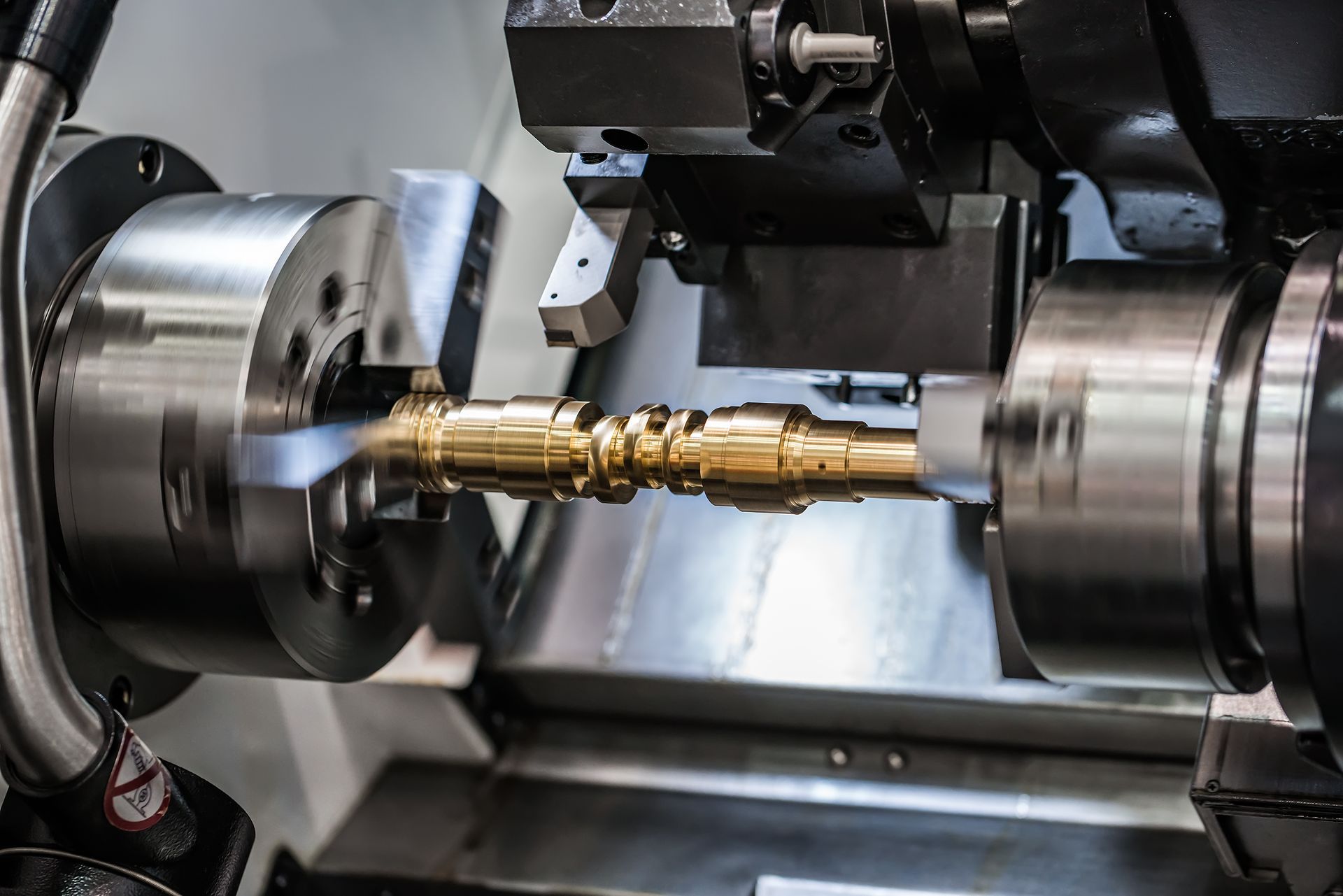

Centerless Grinding for Tubing and Pipe: Ensuring Consistent OD and Roundness
Stainless steel tubing and pipe play essential roles in hydraulic systems, industrial machinery, food-processing equipment, marine assemblies, and OEM manufacturing. In many of these applications, the performance of tubing and pipe depends heavily on the accuracy of its outer diameter (OD) and the consistency of its roundness. Even small dimensional variations can affect sealing, alignment, flow control, or the fit between mating components.
While most stainless tubing and pipe arrive from the mill with general-purpose tolerances, many industries require a higher level of precision. This is where centerless grinding becomes an invaluable finishing method. Centerless grinding refines the OD of tubing and pipe without clamping or distorting the material, creating smoother, straighter, and more dimensionally consistent components.
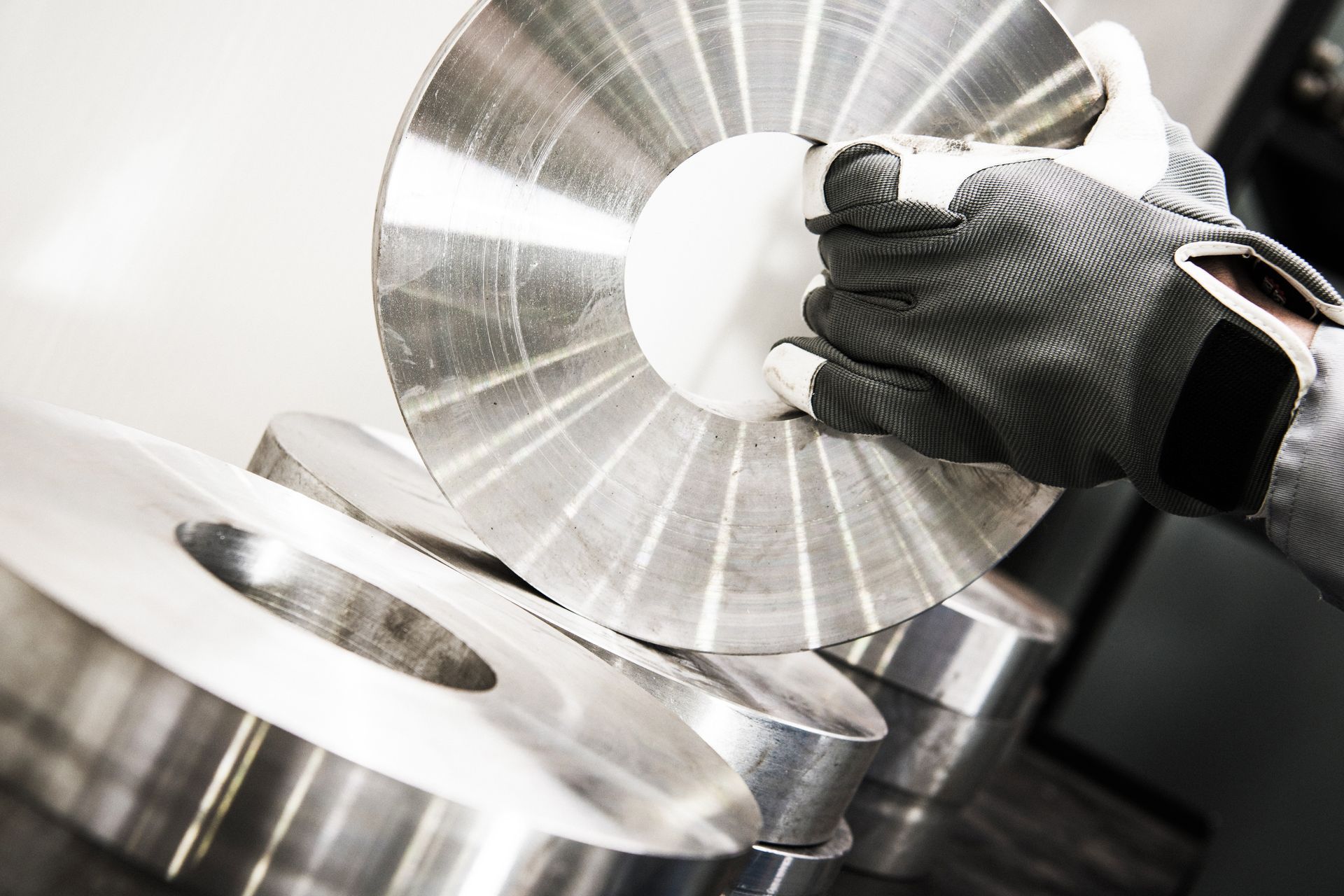
At Action Stainless, centerless grinding is performed in-house to help customers achieve superior OD sizing and roundness for both solid bars and hollow tube or pipe. By supporting the tubing along its length rather than holding it by the ends, the process minimizes deformation and produces a stable, uniform finish across the entire exterior surface.
This article explains how centerless grinding works for tubing and pipe, the advantages it offers, and why it is an important capability for customers who rely on stainless tube and pipe in precision assemblies.
Why Tubing and Pipe Require Accurate OD and Roundness
When tubing or pipe serves as a structural guide, a hydraulic component, a bearing sleeve, or a precision mount, its OD must be controlled closely. Any deviation can affect how the tube fits into housings, brackets, bushings, seals, or clamps. Poor roundness may lead to uneven pressure, misalignment, or vibration during operation.
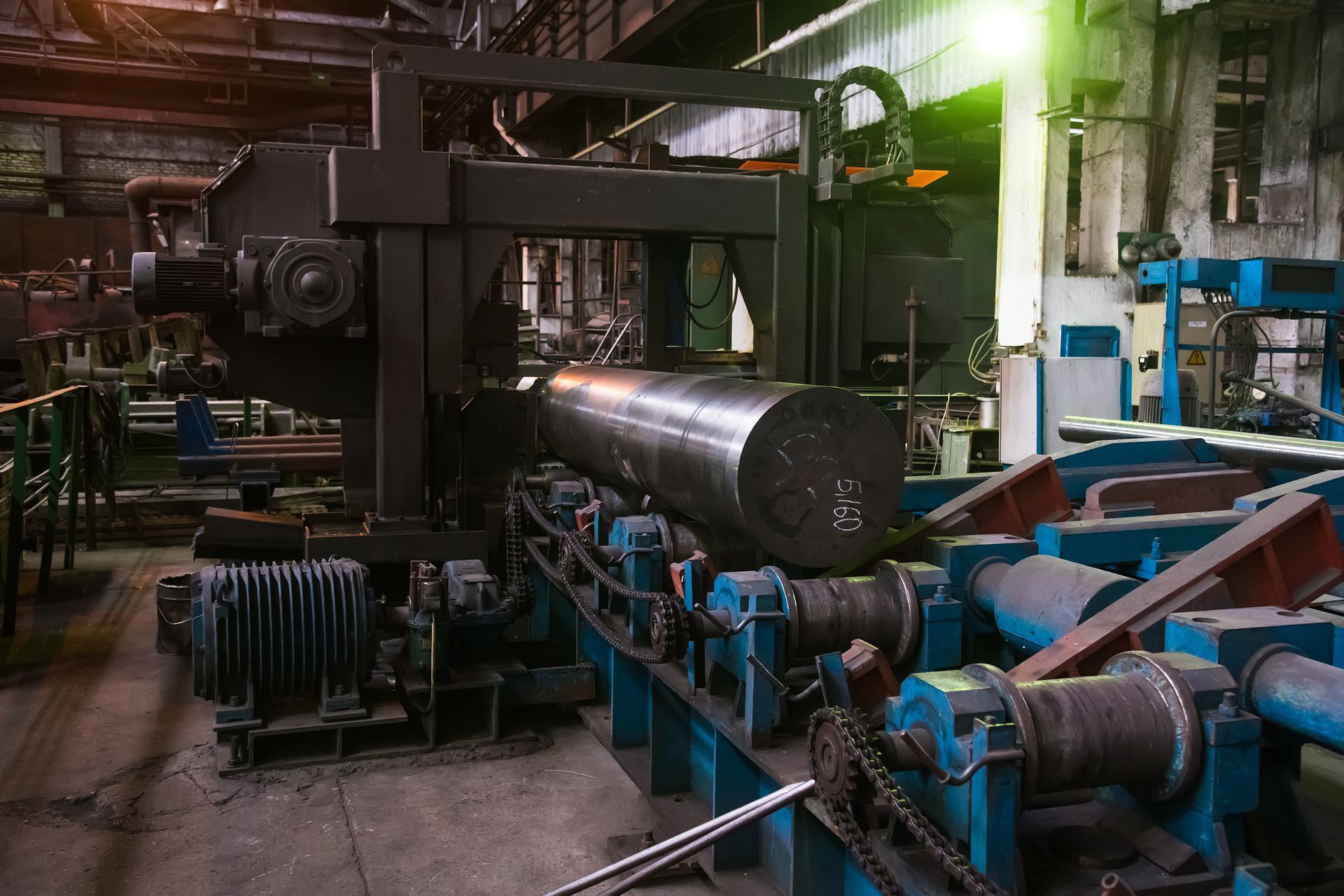
Mill-supplied tubing and pipe often meet general tolerances but may still show OD variation along the length, slight ovality from drawing processes, or minor surface imperfections. For simple structural use, these variations may be acceptable. For precision assemblies, they are not.
Centerless grinding corrects these imperfections by applying uniform abrasive pressure around the circumference of the tube, producing consistent OD and excellent roundness.
How Centerless Grinding Works for Tubing and Pipe
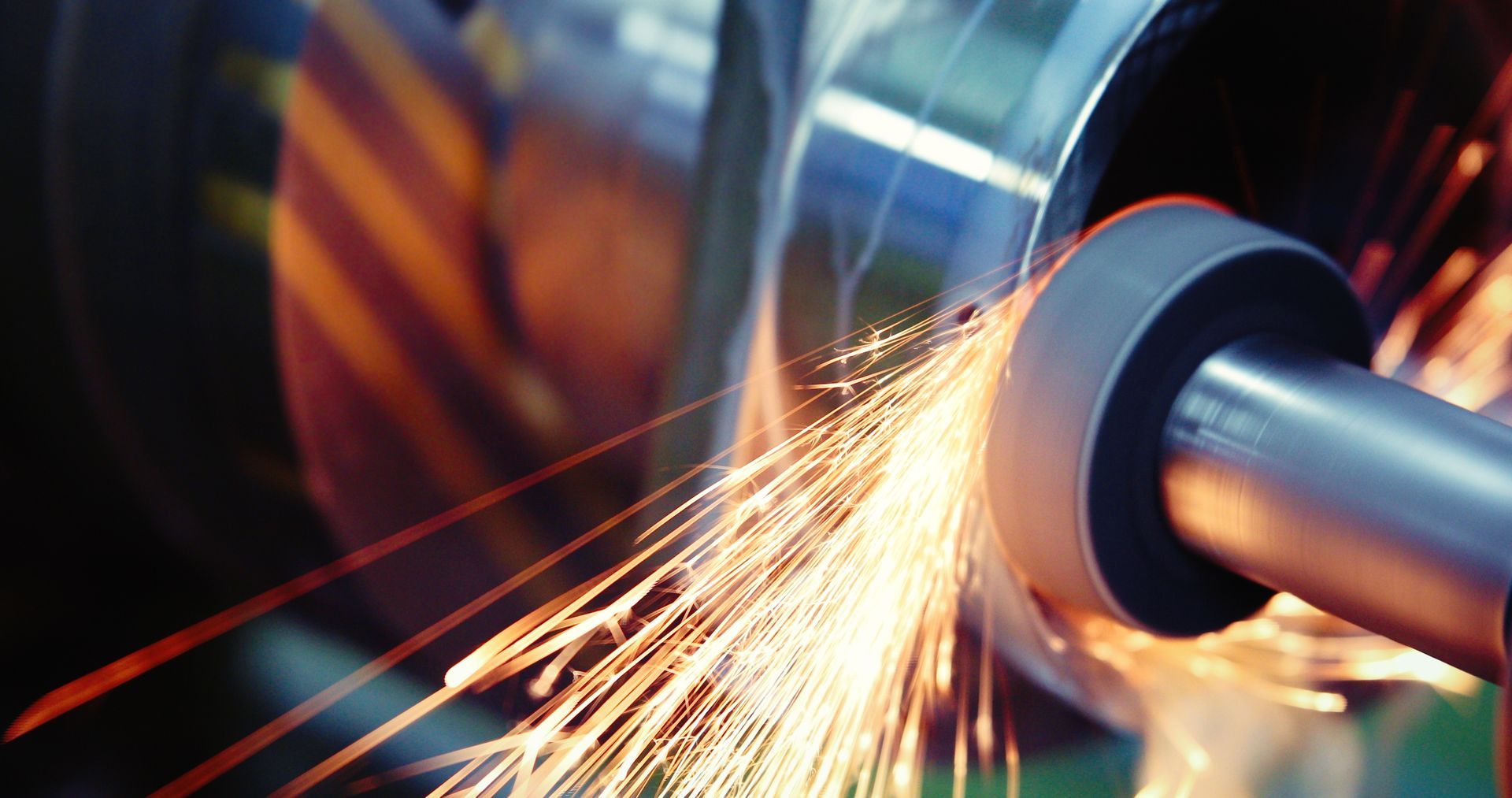
Centerless grinding supports the workpiece from below on a rest blade while two wheels, a grinding wheel and a regulating wheel apply pressure. Because the tube is supported continuously, rather than gripped at the ends, it remains stable throughout the process.
This is especially important for hollow sections. Traditional between-centers grinding risks deforming tubing because clamping at the ends transfers pressure unevenly. Centerless grinding avoids this by eliminating the need for clamping altogether.
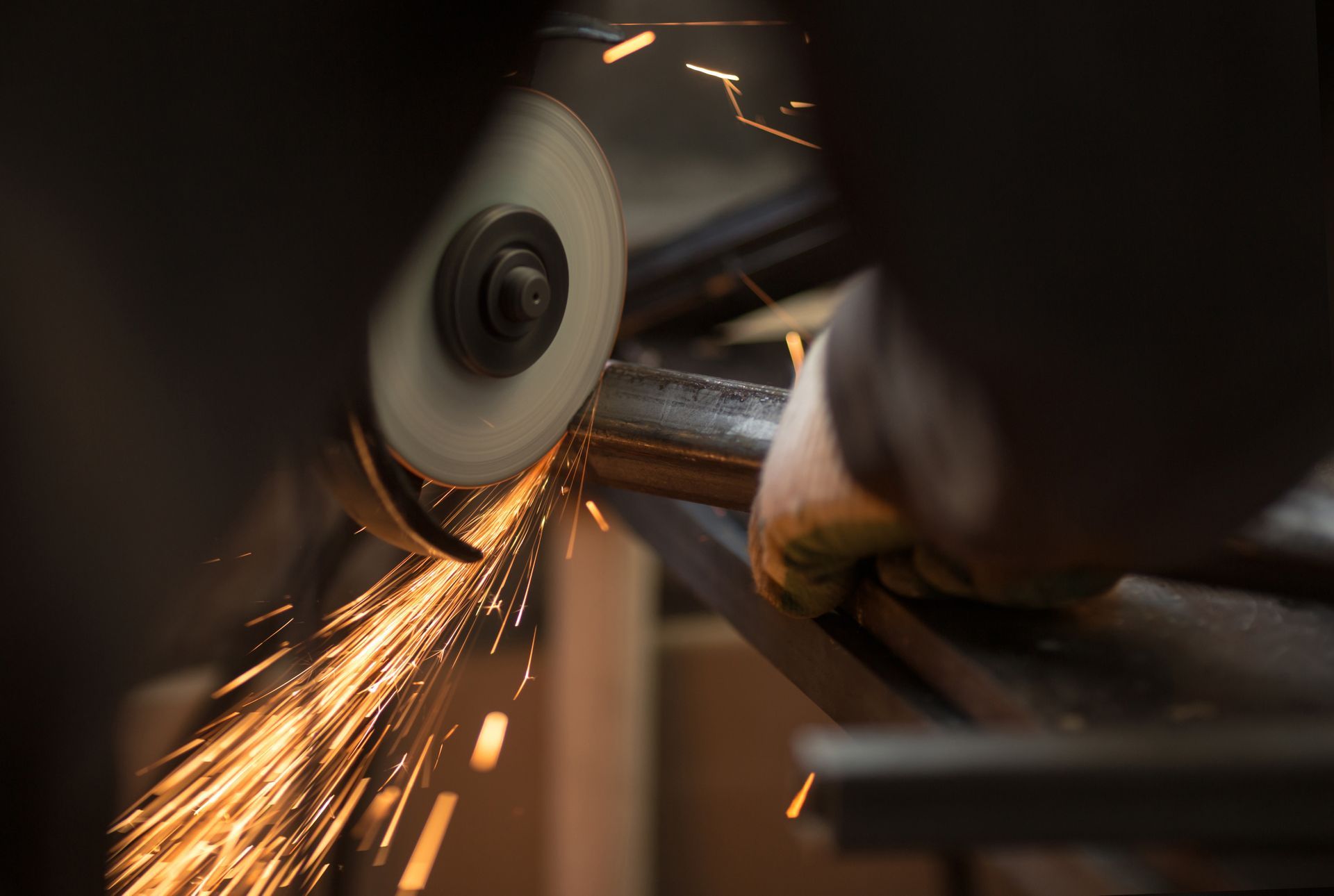
The process begins by placing the tube or pipe on the work rest blade. The regulating wheel rotates the tube at a controlled speed, while the grinding wheel removes small amounts of material from the outer surface. As the tube rotates, the grinding wheel corrects high spots and imperfections, gradually shaping the tube into a consistently round, accurate, and smooth surface.
Because the tube is supported along its full length, the process corrects minor bends, improves roundness, and produces a uniform OD without crushing or distorting the hollow section.
Benefits of Centerless Grinding for Tubing and Pipe
Centerless grinding offers several advantages that make it the preferred finishing method for stainless tubing and pipe where precision matters. One of the most important benefits is improved OD accuracy. By removing material evenly, the process creates consistent OD measurements along the length of the tube. This accuracy enhances the fit and function of tubing in assemblies such as hydraulic guides, bushings, sleeves, and linear motion systems.
Another critical benefit is better roundness. Many tubes and pipes arrive from the mill with slight ovality due to manufacturing stresses or drawing processes. Centerless grinding corrects ovality by reshaping the tube into a true circle, which is essential for applications relying on uniform sealing or consistent load distribution.
Grinding also improves surface finish. A smoother surface reduces friction, lowers wear rates, improves corrosion resistance, and enhances the overall appearance. In industries such as food processing or marine fabrication, where stainless surfaces must remain clean and resilient, a refined surface finish is particularly valuable.
The process also enhances straightness. While centerless grinding is primarily an OD finishing method, the continuous support and balanced grinding forces help correct small bends or deflections, resulting in straighter tubing or pipe.
Finally, centerless grinding is efficient for long lengths and repeat production because the tube moves through the machine continuously. This efficiency makes it suitable for customers who require consistent, repeated OD sizes across multiple pieces of tubing.
Centerless Grinding vs Other Finishing Methods
Other finishing approaches exist, but they are not as effective for tubing and pipe when tight OD control is required. For example, sanding or brushing can improve surface appearance but cannot correct roundness or diameter. Turning is impractical for thin-walled tubing because clamping pressure can distort the shape. Polishing alone cannot fix diameter issues.
Centerless grinding is unique because it removes material evenly around the circumference without stressing the tube. This is why it is preferred for hollow components requiring external accuracy.
Applications That Benefit from Ground Tubing and Pipe
Many industries rely on tubing with precise OD measurements. In hydraulic systems, ground tubing may act as an outer sleeve or guide for moving shafts. The accuracy of the OD affects sealing performance and reduces friction between mating parts.
In marine and offshore applications, roundness and smoothness improve corrosion resistance. For food and beverage equipment, smoother surfaces are easier to sanitize and maintain, reducing contamination risks.
OEM manufacturers use precision ground tubing in linear motion assemblies, mechanical supports, and alignment systems where accuracy ensures long-term operation. Fabricators supplying pump housings, rollers, and structural components also benefit from consistent OD sizing and surface condition.
At Action Stainless, tubing and pipe grinding is commonly used alongside bar grinding when assemblies require both accurate shafts and precise sleeves or housings. Because both solid and hollow components can be ground within the same facility, customers gain consistent quality across all parts.
Grinding and Polishing Together for Tubing and Pipe
Many tubing and pipe applications require not only accurate OD dimensions but also refined surface finishes. After grinding establishes the correct size and straightness, polishing enhances the surface appearance and smoothness. This combination improves both aesthetics and functional performance.
Polished tubing is especially valuable in food processing equipment, sanitary environments, commercial kitchens, and architectural projects. When paired with precision ground OD sizing, polished tubing provides both accuracy and visual appeal.
Action Stainless performs both grinding and polishing in-house, giving customers the flexibility to specify surface requirements based on the final application.
Material and Size Compatibility
Integrated Grinding with Other Services
Centerless grinding at Action Stainless supports a wide range of stainless grades commonly used for tubing and pipe, including 304, 316, duplex stainless, and certain martensitic grades. These materials vary in hardness and heat response, so grinding parameters are adjusted to ensure stable temperatures, good surface quality, and consistent removal rates.
Tube and pipe dimensions must fall within the grinding machine’s workable size range. Hollow sections with adequate wall thickness are particularly suitable since centerless grinding does not require clamping that could distort the shape.
Integrated Grinding with Other Services
One of the advantages Action Stainless offers is the ability to combine tube and pipe grinding with cutting, polishing, and CNC machining. This integrated workflow reduces handling time and ensures tight control over tolerances throughout the entire process.
Customers benefit from predictable results because tubing moves through cutting, grinding, and polishing within the same facility. Dimensional consistency, traceability, and quality inspection are maintained at every stage.
Conclusion
Precision tubing and pipe require accurate outer diameters, dependable roundness, and a smooth, uniform surface. Centerless grinding provides these benefits without distorting the hollow structure, making it the ideal finishing method for applications where stainless tubes or pipes must perform reliably under load, pressure, or motion.
Action Stainless provides in-house centerless grinding for stainless tubing and pipe, allowing customers to achieve the OD accuracy and finish quality required for hydraulic systems, food processing equipment, marine assemblies, and OEM applications. For tubing and pipe that must be consistent, smooth, and dimensionally reliable, centerless grinding is an essential step.
To request a quote or check availability for centerless-ground stainless tubing or pipe, visit https://www.actionstainless.com and connect with the team.
FAQs: Centerless Grinding for Tubing & Pipe
Can Action Stainless grind tubing and pipe?
Yes. Centerless grinding can be performed on tubing and pipe as long as the wall thickness and dimensions fall within machine capabilities.
Does grinding change the inside diameter (ID)?
No. Centerless grinding affects only the outer diameter (OD). The ID remains unchanged.
What benefits does grinding provide for tubing?
Improved OD accuracy, better roundness, smoother surface finish, and enhanced straightness.
Can tubing be polished after grinding?
Yes. Polishing is available for sanitary, decorative, or aesthetic requirements.
Which grades of stainless tubing can be ground?
Common grades such as 304, 316, duplex stainless, and certain martensitic grades.