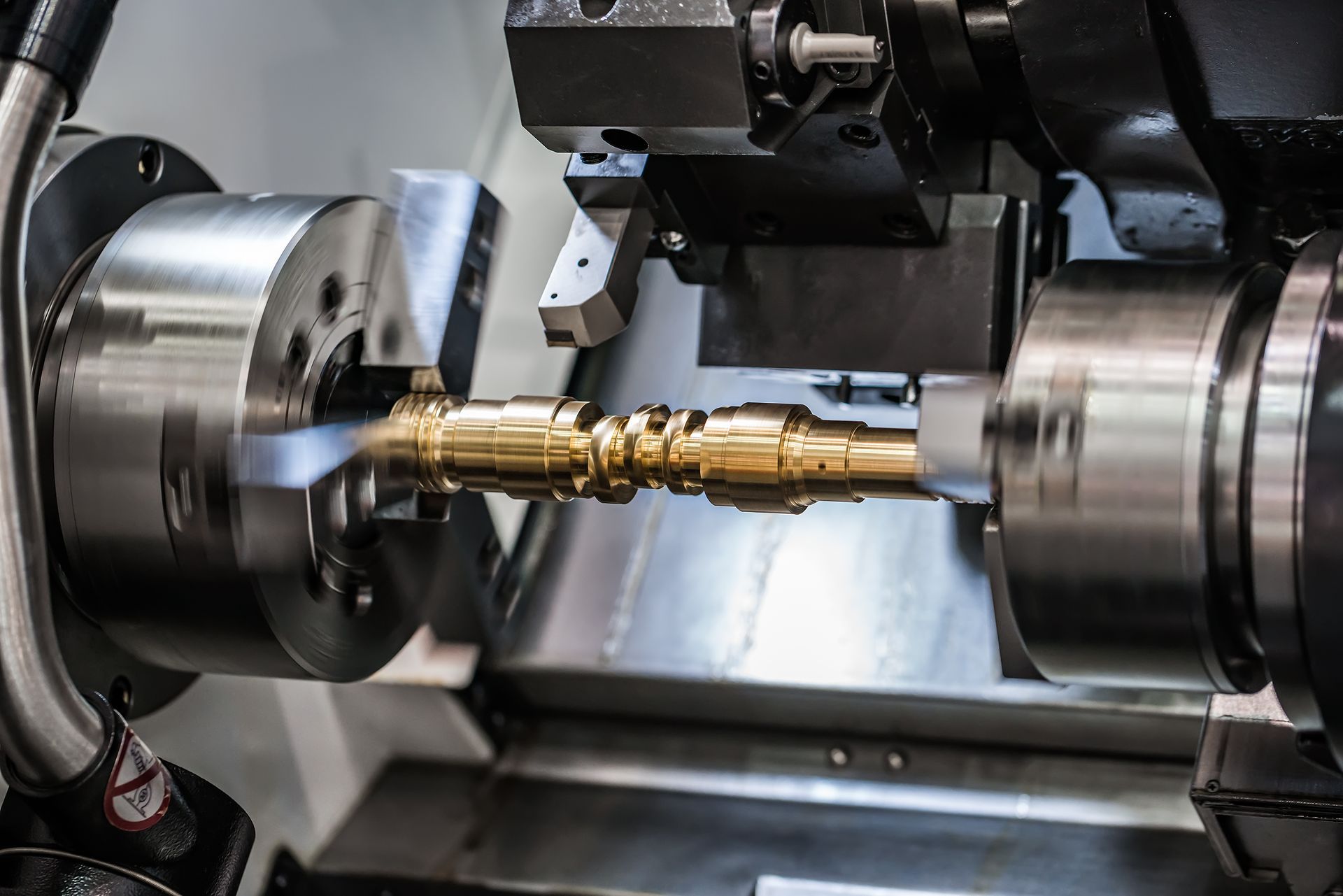

Through-Feed vs In-Feed Centerless Grinding: Choosing the Right Method
Centerless grinding is essential for producing high-quality stainless steel bars that meet strict dimensional, straightness, and surface finish requirements. It is widely used in industries that depend on precision components hydraulic systems, pump assemblies, motion-control equipment, food processing machinery, marine systems, and OEM manufacturing.
While many understand the general concept of centerless grinding, far fewer recognize that there are two primary types of centerless grinding: through-feed and in-feed (also called plunge grinding). Each method works differently and is suited for different shapes, tolerances, and production needs.
At
Action Stainless, understanding these differences is critical for selecting the right grinding strategy for each customer’s stainless bar requirements. This blog breaks down how both grinding methods operate, what makes them unique, and how to choose the best process for your application.
What Centerless Grinding Achieves
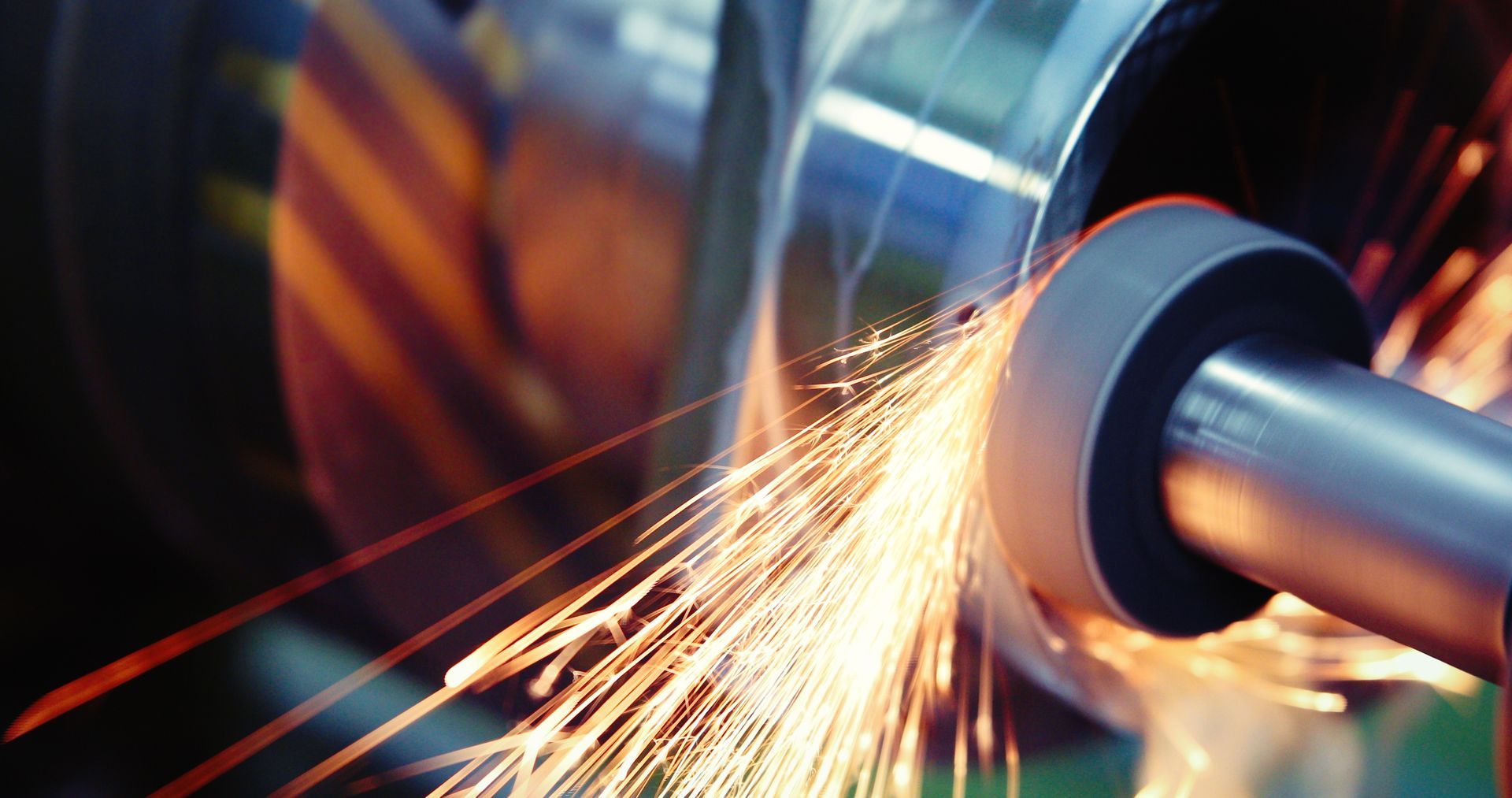
Centerless grinding removes material from stainless bars by rotating them between a grinding wheel and a regulating wheel, with a work rest blade supporting the bar underneath. The result is a bar that has improved diameter accuracy, straightness, roundness, and surface finish.
Unlike traditional OD grinding, centerless grinding does not use centers, chucks, or collets to hold the material. This lack of clamping allows for faster processing, full-length support, and exceptional consistency especially for long stainless bars.
But within this process are two distinct methods: through-feed and in-feed, each with specific strengths.
How Through-Feed Centerless Grinding Works
Through-feed grinding is a continuous process in which the bar moves forward through the grinding and regulating wheels in a straight path. The regulating wheel is angled slightly to guide the bar through the machine as material is removed.
This method is best suited for:
- Long bars
- Straight cylindrical parts
- High-volume production
- Parts with no shoulders, steps, or complex geometries
Because the bar never stops moving, through-feed grinding is extremely efficient and offers excellent repeatability across large quantities. It also delivers outstanding straightness because the bar is supported along its entire length as it travels through the grinding zone.
Advantages of Through-Feed Grinding
- High throughput for large batches
- Excellent straightness and roundness
- Minimal handling between pieces
- Very consistent tolerances
- Cost-effective for longer bars
At Action Stainless, through-feed grinding is widely used for stainless bars that will become hydraulic rods, pump shafts, guide rails, valve stems, and other components requiring uniform diameter along their entire length.
How In-Feed (Plunge) Centerless Grinding Works
In-feed or plunge grinding is used for parts that cannot be processed using through-feed due to their shape or geometry.
Unlike through-feed grinding, the bar does not move axially. Instead, it is placed in position, and the grinding wheel is fed radially into the workpiece to remove material. The regulating wheel keeps the bar in place but does not push it forward.
This method is ideal for:
- Parts with shoulders, grooves, or steps
- Shorter stainless components
- Complex shapes that require precision around non-cylindrical features
- Applications where only a section of the part needs grinding
In-feed grinding allows the operator to control exactly where material is removed, making it excellent for stainless components that must meet specialized engineering specifications.
Advantages of In-Feed Grinding
- Works with complex geometries
- Ideal for stepped or multi-diameter parts
- Allows localized grinding
- Excellent for shorter or specialty parts
- Enables high precision on defined features
Although in-feed grinding is slower than through-feed, its ability to generate intricate profiles makes it an essential part of modern stainless steel fabrication.
Comparison: Through-Feed vs. In-Feed Centerless Grinding
| Feature | Through-Feed Grinding | In-Feed (Plunge) Grinding |
|---|---|---|
| Bar Movement | Continuous axial movement | Stationary (no forward movement) |
| Ideal for Length | Long bars | Shorter components |
| Geometry | Straight, uniform diameter | Shoulders, grooves, multi-diameter shapes |
| Production Speed | Very fast; high volume | Slower; detailed finishing |
| Material Removal | Full-length | Localized or partial |
| Setup Complexity | Lower | Higher, depending on geometry |
| Use Case | Hydraulic rods, pump shafts, motion-control shafts | Specialty parts, stepped components, custom shapes |
This comparison illustrates why many stainless bar applications lean heavily toward through-feed grinding, while highly specialized or geometric components require in-feed grinding to achieve precision.
Why Through-Feed Grinding Is Essential for Stainless Bars
Stainless steel bar production often focuses on long, straight, cylindrical components used in mechanical systems. Through-feed grinding is ideal for this because it ensures:
- Uniform diameter
- Smooth surface finish
- Minimal runout
- Fast production cycles
These qualities are essential for hydraulic shafts, where seals depend on precise surface conditions and straightness, and for pump shafts or valve stems that must rotate smoothly.
At Action Stainless, through-feed grinding provides the backbone for producing centerless-ground bar stock ready for machining or direct installation.
Why In-Feed Grinding Matters for Complex Parts
Not all stainless components are simple cylinders. Many require:
- Multiple diameters
- Reliefs or grooves
- Slight tapers
- Shoulders for mounting or assembly
In-feed grinding accommodates these features because the part remains in place while the grinding wheel shapes the specific areas.
Industries that benefit from in-feed grinding include:
- Valve manufacturing
- Instrumentation and control systems
- Specialty OEM machining
- Marine hardware
- Components with tight geometric transitions
Action Stainless uses in-feed grinding for stainless parts that need localized precision where through-feed grinding cannot access.
How Action Stainless Uses Both Methods
Having both grinding methods in-house allows Action Stainless to meet a wide range of customer requirements.
The facility uses:
- Through-feed grinding for long bars, hydraulic shafts, pump shafts, and high-volume stainless components
- In-feed grinding for custom shapes, stepped features, and shorter high-precision parts
Because grinding is integrated with cutting, machining, and polishing under one roof, customers receive stainless components that are consistent, precisely sized, and ready for the next stage of fabrication.
This integration eliminates unnecessary transfers between suppliers, shortens lead times, and ensures quality control remains consistent throughout the process.
Common Questions Engineers Ask When Choosing a Grinding Method
Engineers and machinists often need to decide between through-feed and in-feed grinding based on part geometry, production schedule, or tolerance needs. Some common questions include:
“Is my part suitable for through-feed grinding?”
If the part is long, cylindrical, and maintains the same diameter along its length, through-feed grinding is usually the right choice.
“What if my part has a shoulder or step?”
Any part with changes in diameter must be processed using in-feed grinding.
“Which method produces better surface finishes?”
Both methods can achieve excellent surface finishes. The choice depends on geometry rather than surface quality.
“Does one method produce tighter tolerances?”
Both can produce tight tolerances, but through-feed excels on long bars, while in-feed excels on local features.
When to Choose Through-Feed Grinding
Through-feed grinding is ideal when your part requires:
- Uniform diameter
- Long bar processing
- Fast production
- Excellent straightness
- High consistency across batches
This method is especially beneficial for stainless bars used in hydraulic, pump, and machine applications.
When to Choose In-Feed Grinding
In-feed grinding is the right choice when your part has:
- Multiple diameters
- Shoulders or grooves
- Short overall length
- Custom profiles
- Precise features that require local grinding
In-feed grinding handles the complexity that through-feed cannot.
Conclusion
Through-feed and in-feed centerless grinding are both essential techniques for producing high-quality stainless steel bars and components. The difference comes down to part geometry, length, and production goals.
Through-feed grinding delivers unmatched efficiency, straightness, and uniformity for long cylindrical bars. In-feed grinding provides the precision required for stepped, grooved, or multi-diameter components.
With both methods available in-house, Action Stainless ensures customers receive stainless components that meet exact specifications whether the job calls for speed, complexity, or both.
FAQs: Through-Feed vs. In-Feed Centerless Grinding
What is the main difference between through-feed and in-feed grinding?
Through-feed grinding continuously feeds the bar through the machine, while in-feed grinding holds the bar stationary and grinds only a specific section.
Which method is best for long stainless bars?
Through-feed grinding offers superior speed and consistency for long-length stainless bar production.
Can in-feed grinding handle complex shapes?
Yes. In-feed grinding is designed for stepped, grooved, or multi-diameter parts.
Do both methods produce accurate tolerances?
Both can achieve tight tolerances. The best method depends on part geometry.
Can Action Stainless perform both types of grinding?
Yes. Action Stainless offers both through-feed and in-feed centerless grinding to meet diverse stainless fabrication needs.