
Centerless Grinding Roundness vs. Cylindricity: What Buyers Should Specify
When ordering precision ground stainless steel bar, terms like roundness, cylindricity, and diameter tolerance are often used together. They are related, but they do not mean the same thing.
For buyers, engineers, and machinists, misunderstanding these terms can lead to incorrect specifications, higher cost, or material that does not fit the final application. A bar can meet diameter tolerance but still have geometry issues that affect performance.
At Action Stainless,
centerless grinding supports stainless steel bar applications where outer diameter consistency and surface condition matter. This guide explains the difference between roundness and cylindricity, when each matters, and how buyers should specify requirements clearly.
What Is Roundness in Centerless Grinding?
Roundness refers to how closely a cross-section of a bar matches a true circle. It is measured at a specific point along the length of the bar.
If a bar is slightly oval, lobed, or irregular at one cross-section, it may have a roundness issue even if the average diameter appears correct.
Roundness matters when the bar will rotate, seal, slide, or fit into a mating component. Common examples include shafting, pins, bushings, and precision ground bar used in mechanical assemblies.
What Is Cylindricity?
Cylindricity is a broader geometric control. It evaluates the entire surface of the cylinder, not just one cross-section.
A cylindricity tolerance controls:
- Roundness along the full length
- Straightness of the surface
- Taper and barrel shape
- Overall cylindrical form
In simple terms, roundness asks, “Is this section circular?” Cylindricity asks, “Is the entire bar a true cylinder?”
Because cylindricity controls more geometry, it is usually a more demanding specification.
Roundness vs. Cylindricity: Key Differences
| Specification | What It Controls | Where It Matters |
|---|---|---|
| Roundness | Circularity at one cross-section | Rotating or sealing surfaces |
| Cylindricity | Full cylindrical form | Long shafts, precision assemblies |
| Diameter tolerance | Size range only | General fit and machining |
| Straightness | Line alignment along length | Long bars and shafting |
This table shows why diameter tolerance alone may not fully define how a precision bar will perform.
Why Diameter Tolerance Is Not Enough
Diameter tolerance controls size, but it does not fully describe shape. A bar may fall within the correct diameter range but still show slight ovality, taper, or form variation.
For many general machining applications, diameter tolerance may be enough. For precision applications, additional geometry controls may be needed.
Buyers should consider roundness or cylindricity when the bar will be used in:
- Bearing contact
- Seal contact
- Rotating assemblies
- Linear motion systems
- Precision shafting
These applications depend on more than average diameter. Starting with the right
stainless steel products helps align material selection with the intended use..
When Buyers Should Specify Roundness
Roundness should be specified when the shape of the bar at a specific cross-section affects function.
This is common when the part must rotate smoothly or maintain consistent contact with another component. Roundness is especially important for shafts, rods, and pins where uneven geometry can contribute to vibration, poor fit, or inconsistent wear.
If the application only requires local circular accuracy, roundness may be the correct callout.
When Buyers Should Specify Cylindricity
Cylindricity should be considered when the entire length of the bar must behave like a true cylinder.
This matters most for longer shafts or components where overall geometry affects alignment and motion. Cylindricity is more comprehensive than roundness because it controls the full surface form.
However, it may also increase inspection complexity and processing expectations. Buyers should avoid specifying cylindricity unless the application truly requires it.
How Over-Specification Can Increase Cost
Overly tight geometric requirements can increase grinding time, inspection effort, and cost. If roundness is sufficient, specifying cylindricity may add unnecessary complexity.
Before placing an order, buyers should ask:
- Does the application need local roundness only?
- Does the full bar length need controlled cylindrical form?
- Will the bar be machined further?
- Is the requirement functional or simply assumed?
Clear answers help avoid over-specifying material.
How Centerless Grinding Supports Bar Geometry
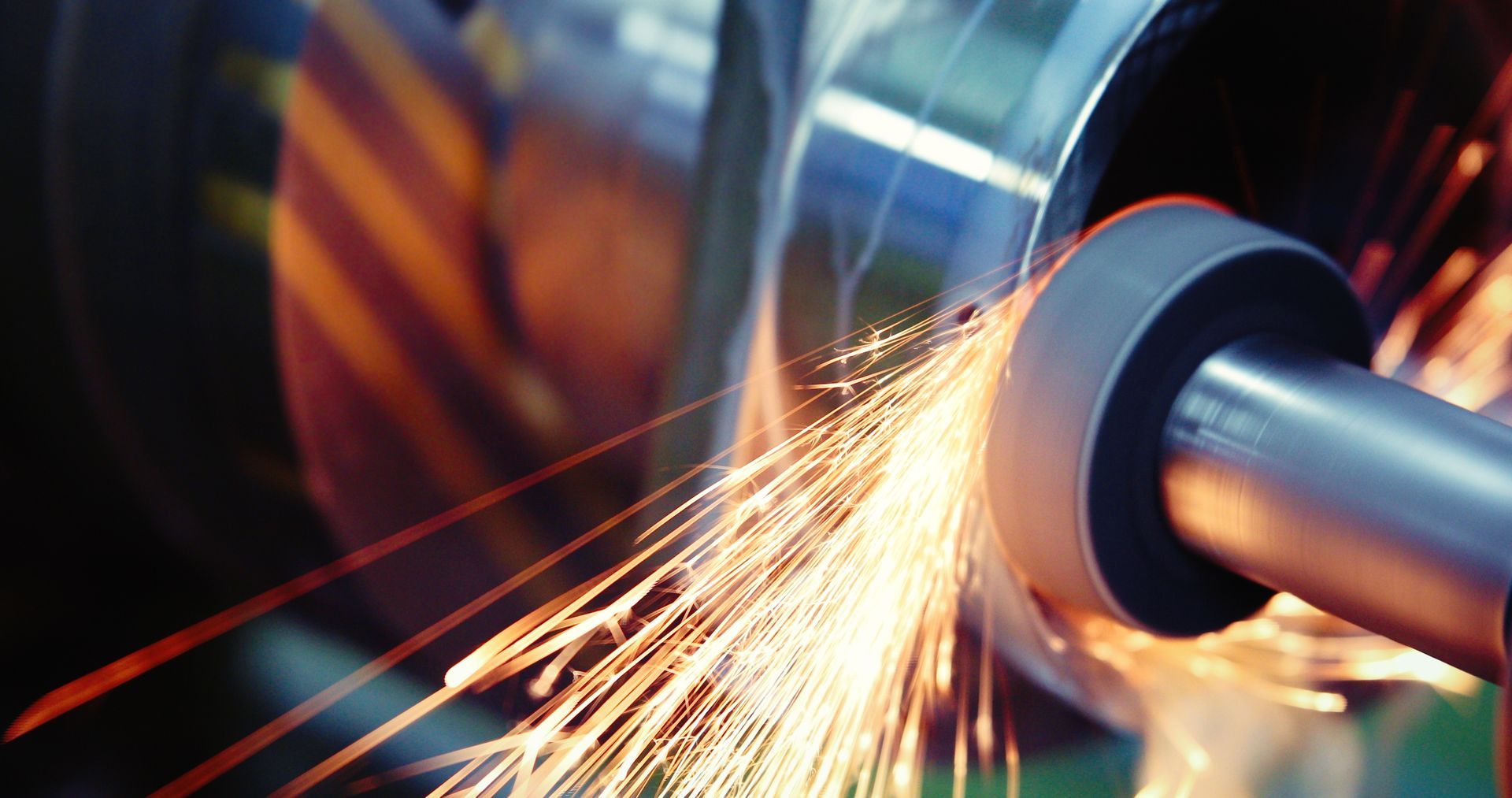
Centerless grinding improves outer diameter consistency and surface condition by supporting the bar during material removal. The process can help produce more consistent roundness and overall bar geometry compared to less controlled stock conditions.
The final specification should still be clearly communicated. Grinding requirements depend on the application, the material condition, and the geometry being requested. For projects involving added preparation steps, Action Stainless also provides
value-added services that support downstream fabrication needs.
How to Write a Clear Grinding Specification
A strong RFQ should define the geometry requirement clearly. Instead of using broad language like “precision ground,” buyers should identify what matters most.
Useful specification details include:
- Final outer diameter
- Diameter tolerance
- Roundness requirement, if needed
- Cylindricity requirement, if needed
- Bar length
- Surface finish expectations
- Final application
This helps avoid confusion during quoting and production planning.
Common Specification Mistakes
Buyers sometimes assume all precision ground bar automatically meets every geometric requirement. That is not always the case. Different applications require different levels of control.
Common mistakes include specifying diameter only when roundness matters, using cylindricity when roundness is sufficient, or failing to explain the final application.
How Action Stainless Supports Precision Ground Bar Applications
Action Stainless supplies stainless steel bar and supports centerless grinding for applications where diameter control and surface condition are important. When buyers clearly define requirements such as roundness, cylindricity, tolerance, and finish, the material can be aligned more closely with application needs.
For applications where surface condition also matters, polishing and finishing may support the final material requirements.
Roundness and cylindricity are related, but they control different aspects of bar geometry. Roundness focuses on circularity at a cross-section, while cylindricity controls the full surface form of the bar.
Buyers should specify the requirement that matches the application, not simply choose the most restrictive callout. Clear specifications help reduce quoting delays, avoid unnecessary cost, and improve confidence in the final precision ground bar.
Contact us
to discuss stainless steel material options and fabrication-related considerations.
FAQs: Centerless Grinding Roundness vs. Cylindricity
What is the difference between roundness and cylindricity?
Roundness measures how circular one cross-section is. Cylindricity controls the full cylindrical form along the entire surface.
Is diameter tolerance the same as roundness?
No. Diameter tolerance controls size, while roundness controls shape at a specific cross-section.
When should I specify cylindricity tolerance?
Specify cylindricity when the full length of the bar must maintain controlled cylindrical form for alignment, rotation, or assembly.
Does centerless grinding improve roundness?
Centerless grinding can improve roundness and OD consistency when properly specified and controlled.
Can over-specifying cylindricity increase cost?
Yes. More restrictive geometry requirements can increase processing and inspection effort.